Quick answer: Yes, two companies can have the same name, as long as they're registered in different states. Each state keeps its own business registry and only checks for duplicates within it. So "Northwind LLC" can exist in Wyoming and Texas at the same time.
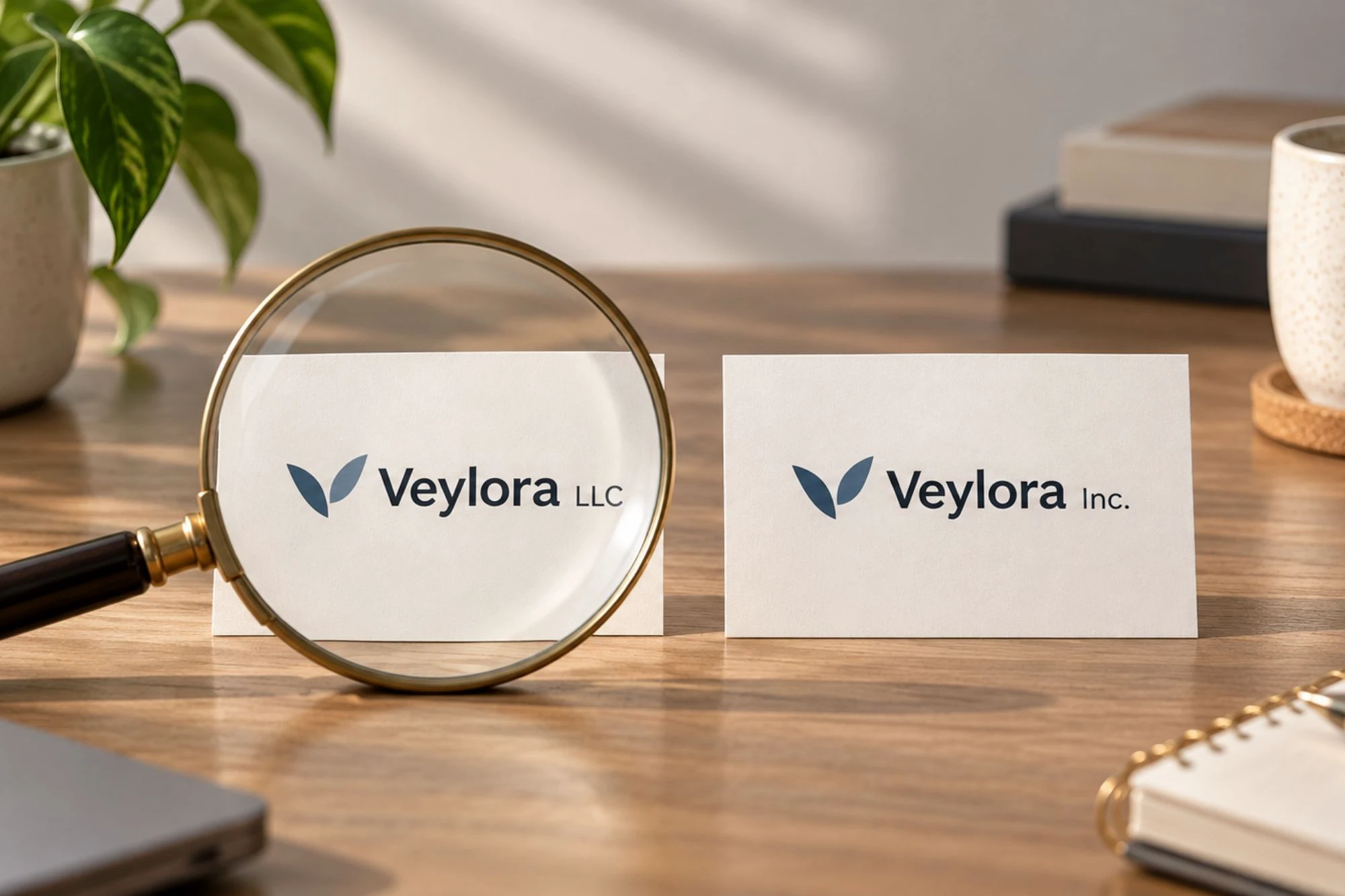
Within the same state, the name usually has to be distinguishable. Changing only "LLC" to "Inc." typically isn't enough.
Being allowed to register a name isn't the same as being allowed to use it. Trademark rights are separate. If another business already uses the name as a brand for similar goods or services, you can face an infringement claim even if your state approved your filing.
Before you file, check both: the state business registry and the USPTO trademark database.
Key Takeaways
- State registration protects a name only inside that state's registry.
- Trademark rights come from using a brand in commerce, and federal registration strengthens them nationwide.
- "LLC" vs. "Inc." usually doesn't make two names different in the same state.
- Two checks, five minutes each: state search + USPTO search.
You've found the perfect name for your company, only to discover a business with the same name in another state. Or you're wondering whether someone else can register your name. Here's how US name rules actually work, why the answer depends on where you look, and how to check a name before you file.
The Short Answer
Situation | Usually allowed? |
|---|---|
Same name, different states | Yes. Each state checks only its own registry |
Same name, same state | No. Names must be distinguishable in that state's records |
Same name, same state, only the suffix differs (LLC vs. Inc.) | Usually no. Many states ignore entity suffixes when comparing names |
Same name used as a brand for similar goods or services | Risky, even if the state approved your filing. This is a trademark question |
State-Level Uniqueness: How It Really Works
When you form an LLC or corporation, the state checks your proposed name against its own records only. The usual standard is that the name must be "distinguishable on the record" from existing entities in that state.
What "distinguishable" means varies by state, but many states ignore the same details. Florida's official rules are a clear example. Florida disregards:
- Entity suffixes (LLC, Inc., Corp.)
- Articles ("the," "a," "an")
- "And" versus "&"
- Singular, plural and possessive forms
- Punctuation and symbols
So in Florida, "Blue Harbor Trading, LLC" and "The Blue Harbor Trading Inc." are treated as the same name.
Inactive companies can still block a name. In some states, a dissolved company's name stays unavailable for a period after dissolution.
Why the Same Name Can Exist in Two States
The US has no national registry of company names. Each state runs its own system, and they don't check each other's records. That's why:
- A Northwind Ventures LLC in Wyoming and a Northwind Ventures LLC in Texas can both exist legally.
- Your state approving your name says nothing about whether the name is used elsewhere.
One practical catch: if your company later registers to do business in another state (for example, because you open an office there) and your name is already taken in that state, you may need to operate there under an alternative name. That's usually a DBA. See our guide to DBA vs. LLC for how that works.
Trademark Rights Are Separate From State Registration
This is where most founders get caught. Registering a company name with a state does not give you trademark rights, and it doesn't protect you from someone else's.
- Trademark rights come from use. A business that uses a name as a brand for its goods or services can build rights in that name, even without registering it.
- Federal registration with the USPTO strengthens those rights across the country.
- The test is "likelihood of confusion." Would customers likely confuse your brand with an existing one, given how similar the names are and how related the goods or services are?
What this means in practice: the same word can be used by unrelated businesses in unrelated industries. A search for "Northwind" in the USPTO database, for example, returns dozens of marks owned by different companies for very different goods and services. But if you sell candles under a name that an established candle brand already uses, your state approval won't help you.
This is general information, not legal advice. If a name matters to your brand, have a trademark attorney review it before you invest in it.
How to Check Name Availability (State + USPTO)
Step 1: Search the state's business registry
Every state has an online business entity search on its Secretary of State (or equivalent) website. Florida's, for example, is Sunbiz, and most states offer a similar search by entity name. The results show existing names and their status, including both active and inactive entities. Some inactive names are still unavailable for a period.
Tips:
- Search the core words, not the suffix.
- Check how the state treats inactive names.
- If you'll operate in more than one state, search each one.
Step 2: Search the USPTO trademark database
Use the USPTO's free Trademark Search system, which replaced the old TESS database in 2023. Search by "Wordmark" to find registered and pending trademarks containing your word. Results show each mark's status (live or dead), goods and services, class and owner. The same word can appear in many unrelated classes.
What to look for:
- Live marks (registered or pending) for similar goods or services are the main concern.
- Dead marks (cancelled or abandoned) are usually less of a concern, but the business may still be using the name.
- Similar spellings and sounds count, not just exact matches.
Step 3: A quick web and domain check
The USPTO database doesn't include state trademarks or brands that are used but not registered. A web search, a domain lookup and a check of the main marketplaces and social platforms help fill that gap.
What to Do If the Name Is Taken
- Taken in your state's registry: Add a distinctive word ("Northwind Ceramics LLC"), or choose another name. Don't rely on changing only the suffix.
- Taken in another state only: You can usually register it in your state. But check trademarks before you build a brand on it.
- Used as a trademark for similar goods or services: Choose a different brand name. This is the safest option, and far cheaper than rebranding later.
- Your legal name is fine, but you want a different brand: Register a DBA under your company.
- Not sure: Ask a trademark attorney before you launch.
For naming tips by entity type, see our guides to choosing a name for your LLC and choosing a corporation name.
Same Name, Different Entity Type: LLC vs. Inc.
A common question: if "Blue Harbor LLC" exists, can you register "Blue Harbor Inc." in the same state?
Usually not. Many states, Florida among them, ignore entity suffixes when comparing names, so the two would be treated as identical. Even in a state that allowed it, using nearly the same name for a similar business invites customer confusion and trademark disputes.
Risk: When Using a Taken Name Gets You Sued
Your state approval protects your filing, not your brand. Using a name that conflicts with someone's trademark can lead to:
- A cease-and-desist letter asking you to stop using the name
- Marketplace takedowns: platforms like Amazon act on trademark complaints
- An infringement lawsuit, with possible damages
- Rebranding costs: new domain, packaging, listings, reviews and marketing
The risk grows with how similar the names are, how related the products are, and how established the other brand is. A five-minute search before filing is far cheaper than any of the above.
How Clemta Helps
Clemta checks name availability as part of US company formation, so your filing isn't rejected for a conflict in the state registry. If you want to protect your brand nationally, Clemta also offers US trademark registration support with the USPTO.
Ready to lock in your company name? Start your US company with Clemta.
FAQ
Can two LLCs have the same name?
Yes, if they're registered in different states. Within the same state, names must be distinguishable, and changing only the suffix usually isn't enough.
Does registering my LLC name protect it nationwide?
No. State registration only blocks the same name within that state's registry. Nationwide protection for a brand comes from trademark rights, which federal registration with the USPTO strengthens.
Can someone use my company name in another state?
They can usually register the same company name in another state. Whether they can use it as a brand depends on trademark rights, including yours if you've been using the name in commerce or registered it.
Is a trademark the same as a business name?
No. A business name is your company's legal name in a state registry. A trademark is a brand name (or logo) that identifies your goods or services. A business name can also be a trademark, but registering one doesn't create the other.
This article is for general information only and isn't legal advice. Name rules vary by state, and trademark questions depend on the facts; consult a trademark attorney for advice on your situation.