Key Takeaways
- Foreign-owned U.S. single-member LLCs may need to file Form 5472 with a pro forma Form 1120 when they have reportable transactions with a foreign owner or related party, even if no U.S. federal income tax is owed. [1]
- A late, missing, inaccurately filed, or substantially incomplete Form 5472 can trigger an initial $25,000 IRS penalty. Additional $25,000 continuation penalties may apply after IRS notice if the failure is not corrected. [1]
- The penalty may be challenged when the taxpayer can establish reasonable cause. A 2026 IRS Chief Counsel Advice discusses a favorable small-corporation framework for certain taxpayers with $20 million or less in gross receipts, limited U.S. presence, lack of knowledge, and prompt cooperation. [4]
- First-Time Abate and the 2026 Automatic Exemption from Penalty should not be treated as automatic Form 5472 relief. Reasonable cause usually remains the main path. [3][5]
Key Facts
Question | Short answer |
|---|---|
Initial penalty | Generally $25,000 per failure. |
Can it increase? | Yes. Additional $25,000 continuation penalties may apply after the 90-day period following IRS notice. |
Can no-tax LLCs be penalized? | Yes. Form 5472 is an information-reporting requirement. |
Can owner contributions count? | Yes. Contributions, distributions, formation, and dissolution transactions can be reportable. |
Can the penalty be removed? | Potentially, if reasonable cause or another relief basis applies. |
Why This Matters
Owning a U.S. LLC does not always mean owing U.S. federal income tax. But it can still mean having a federal information-reporting obligation.
For international founders, one of the most commonly missed requirements is Form 5472. A foreign-owned single-member LLC may need to file it even when the company had little revenue, no profit, or no U.S. tax due.
That distinction matters because failing to file Form 5472 correctly and on time can result in an initial $25,000 IRS civil penalty. [1]
If you received a Form 5472 penalty notice, it deserves prompt attention. But a notice does not always mean paying the full assessment is the only possible outcome.
What Is Form 5472?
Form 5472 is an IRS information return used to report certain transactions between a reporting corporation and related parties.
A reporting corporation generally includes a U.S. corporation in which a foreign shareholder owns at least 25% of the shares or voting power. It can also include a wholly foreign-owned U.S. disregarded entity, such as many foreign-owned single-member LLCs. [1]
For tax years beginning on or after January 1, 2017, the IRS treats these foreign-owned U.S. disregarded entities as corporations for limited Section 6038A reporting purposes. That special rule is what creates the Form 5472 filing obligation. [1]
When Does a Foreign-Owned LLC Need to File?
A foreign-owned U.S. disregarded entity generally must file Form 5472 if it had a reportable transaction with its foreign owner or another related party during the tax year.
This does not require a third-party commercial transaction. For example, formation costs, official fees, owner contributions, reimbursements, or even small expenses paid by the foreign owner on behalf of the LLC can be reportable if they involve a transfer of money or property between the owner and the company. [1]
For these LLCs, reportable transactions can include:
- formation or dissolution transactions,
- capital contributions,
- distributions,
- acquisitions or dispositions, and
- other related-party payments, reimbursements, or receipts.
So an LLC can have a filing requirement even if it had no customers, no profit, no third-party sales, or no federal income tax due. [1]
How Does the Filing Work?
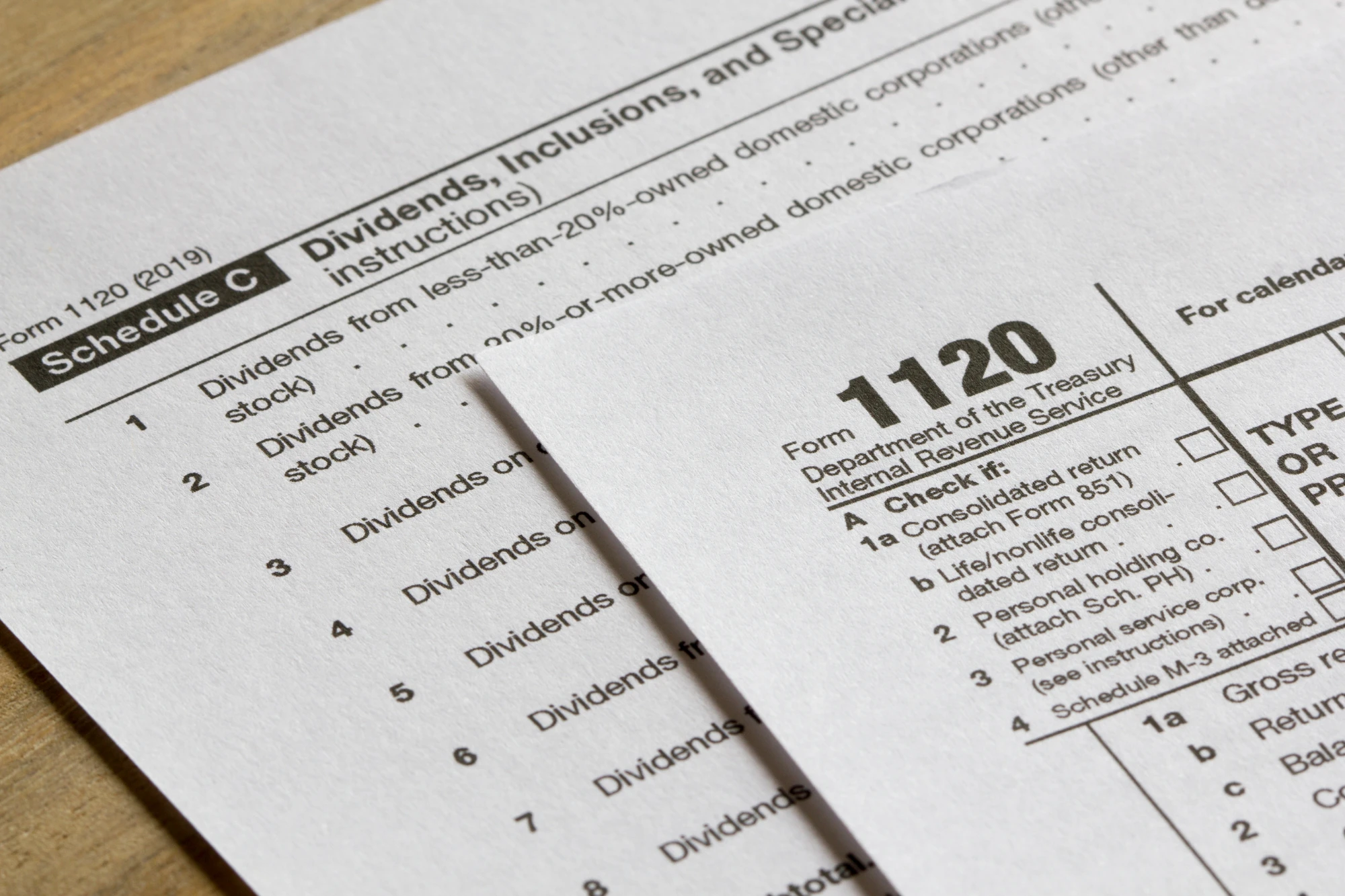
A foreign-owned U.S. disregarded entity required to file Form 5472 generally files it with a pro forma Form 1120 by the applicable Form 1120 deadline, including a valid extension. [1]
An extension can be requested with Form 7004, but it must be submitted by the original due date. [1]
Important: foreign-owned U.S. disregarded entities currently cannot electronically file this Form 5472 package. IRS instructions require the dedicated fax or mailing process. [1]
How Much Is the Penalty?
The initial Form 5472 penalty is generally $25,000 per failure.
The penalty can apply if the form is late, missing, inaccurately filed, filed in the wrong manner, or substantially incomplete. The IRS states that a substantially incomplete Form 5472 is treated as a failure to file. [1]
The penalty can also grow. If the failure continues for more than 90 days after IRS notification, additional $25,000 penalties may apply for each 30-day period, or part of one, during which the failure continues. [1]
Are These Penalties Automatic?
Certain Form 5472 penalties can be systemically assessed. IRS procedures state that beginning in 2013, the IRS Master File began systemically assessing Section 6038A initial penalties when Form 5472 was attached to a late-filed Form 1120-series return. [3]
For tax years beginning January 1, 2018 or later, that systemic initial penalty is $25,000 for each applicable Form 5472. These assessments can result in a CP215 Notice of Penalty Charge. [3]
The safer framing is not that there is a new 2026 crackdown. It is that the penalty is real, the IRS has existing assessment procedures, and foreign founders should not assume a late Form 5472 will go unnoticed.
Can the Penalty Be Removed?
Potentially, yes. The most important relief path is usually reasonable cause.
Reasonable cause depends on the facts. A request may need to explain what caused the filing failure, what the founder understood at the time, whether professional advice was involved, when the issue was discovered, how quickly it was corrected, and what documents support the explanation.
Simply saying "I did not know Form 5472 existed" should not be treated as guaranteed relief. The surrounding facts matter. [4]
2026 IRS Guidance: Small-Corporation Reasonable Cause
A Chief Counsel Advice released on April 24, 2026 discusses a favorable reasonable-cause rule for certain small corporations. The memo is nonprecedential, but it is useful IRS guidance for evaluating Form 5472 penalty relief. [4]
The small-corporation provision can be relevant where the taxpayer has $20 million or less in overall gross receipts, lacked knowledge of the Section 6038A rules, had limited presence in and contact with the United States, and promptly complied with IRS requests.
This does not create automatic forgiveness. But for smaller foreign-owned businesses operated mostly from outside the United States, it can be an important part of the reasonable-cause analysis.
What About First-Time Abate or AEP?
First-Time Abate generally does not apply directly to Form 5472 because it is an event-based filing requirement. However, limited relief may be available for certain systemically assessed PRN 711 penalties when the related Form 1120 qualifies for FTA and additional IRS criteria are satisfied. [3]
In July 2026, the IRS began replacing First-Time Abate with Automatic Exemption from Penalty, or AEP. AEP applies to specified failure-to-file, failure-to-pay, and failure-to-deposit penalties, and the IRS says information returns generally are not eligible [5]
For Form 5472, founders should not assume that FTA or AEP will eliminate the penalty. The more reliable legal route to analyze is reasonable cause under IRC Section 6038A(d)(3), together with prompt correction of the filing issue.
What Should You Do After a Form 5472 Notice?
First, do not ignore it. Read the notice and identify the tax year, penalty amount, reason for the assessment, and response deadline.
Then determine what happened:
- Was Form 5472 never filed?
- Was it filed late?
- Was an extension filed?
- Was the IRS missing proof of a timely filing?
- Was the form incomplete?
- Or was Form 5472 not required for that year?
If a required filing is still missing, correcting it quickly matters because continuation penalties can apply after IRS notification. If you disagree with a CP215 notice, the IRS advises contacting the agency with supporting paperwork available. [6]
How to Avoid Form 5472 Penalties
- Treat Form 5472 as part of annual compliance from the start.
- Track related-party transactions throughout the year.
- File the Form 5472 and pro forma Form 1120 by the deadline, or file Form 7004 on time.
- Keep fax or mailing records because foreign-owned U.S. disregarded entities cannot currently e-file this package.
- Review filing obligations before dissolving the LLC, since dissolution-related transactions can also be reportable.
Bottom Line
A U.S. LLC can owe zero federal income tax and still face a $25,000 federal information-reporting penalty.
The good news is that a Form 5472 penalty notice does not always mean the full amount must ultimately be paid. Reasonable-cause relief may be available, especially for certain smaller foreign-owned companies with limited U.S. presence.
Need help keeping your U.S. company compliant? Clemta helps international founders manage ongoing U.S. company requirements, so important filings and deadlines are easier to stay ahead of.
FAQ
Does a foreign-owned LLC need to file Form 5472 if it had no revenue?
Potentially, yes. The question is whether the LLC had reportable transactions with its foreign owner or another related party, not only whether it generated revenue.
Is the Form 5472 penalty really $25,000?
Yes. The IRS states that failure to timely file a complete Form 5472 can result in an initial $25,000 penalty. [1]
Can the $25,000 penalty be waived?
Potentially. Reasonable-cause relief may be available, but it depends on the facts and supporting documentation.
Does First-Time Abate apply?
Generally, no. Even for systemically assessed PRN 711 penalties, founders should not rely on FTA as the practical relief strategy. [3]
Does AEP apply to Form 5472?
It should not be treated as Form 5472 relief. AEP covers specified failure-to-file, failure-to-pay, and failure-to-deposit penalties, while the IRS says information returns generally are not eligible. [5]
Can a closed LLC receive a notice?
Yes. Closing an LLC does not erase prior-year federal filing obligations.
Primary Sources
- [1] IRS - Instructions for Form 5472: irs.gov/instructions/i5472
- [2] IRS - International Information Reporting Penalties: irs.gov/payments/international-information-reporting-penalties
- [3] IRS - IRM 20.1.9, International Penalties: irs.gov/irm/part20/irm_20-001-009
- [4] IRS Chief Counsel Advice 202617012: irs.gov/pub/irs-wd/202617012.pdf
- [5] IRS - Automatic Exemption from Penalty: irs.gov/newsroom/irs-simplifies-penalty-relief
- [6] IRS - Understanding Your CP215 Notice: irs.gov/individuals/understanding-your-cp215-notice
Disclaimer
This article is provided for general informational purposes and does not constitute legal or tax advice. Tax obligations depend on the facts and circumstances of each company. Consult a qualified tax professional regarding your specific situation.

Begüm Tekin
Tax Operations Manager at Clemta