The Short Answer
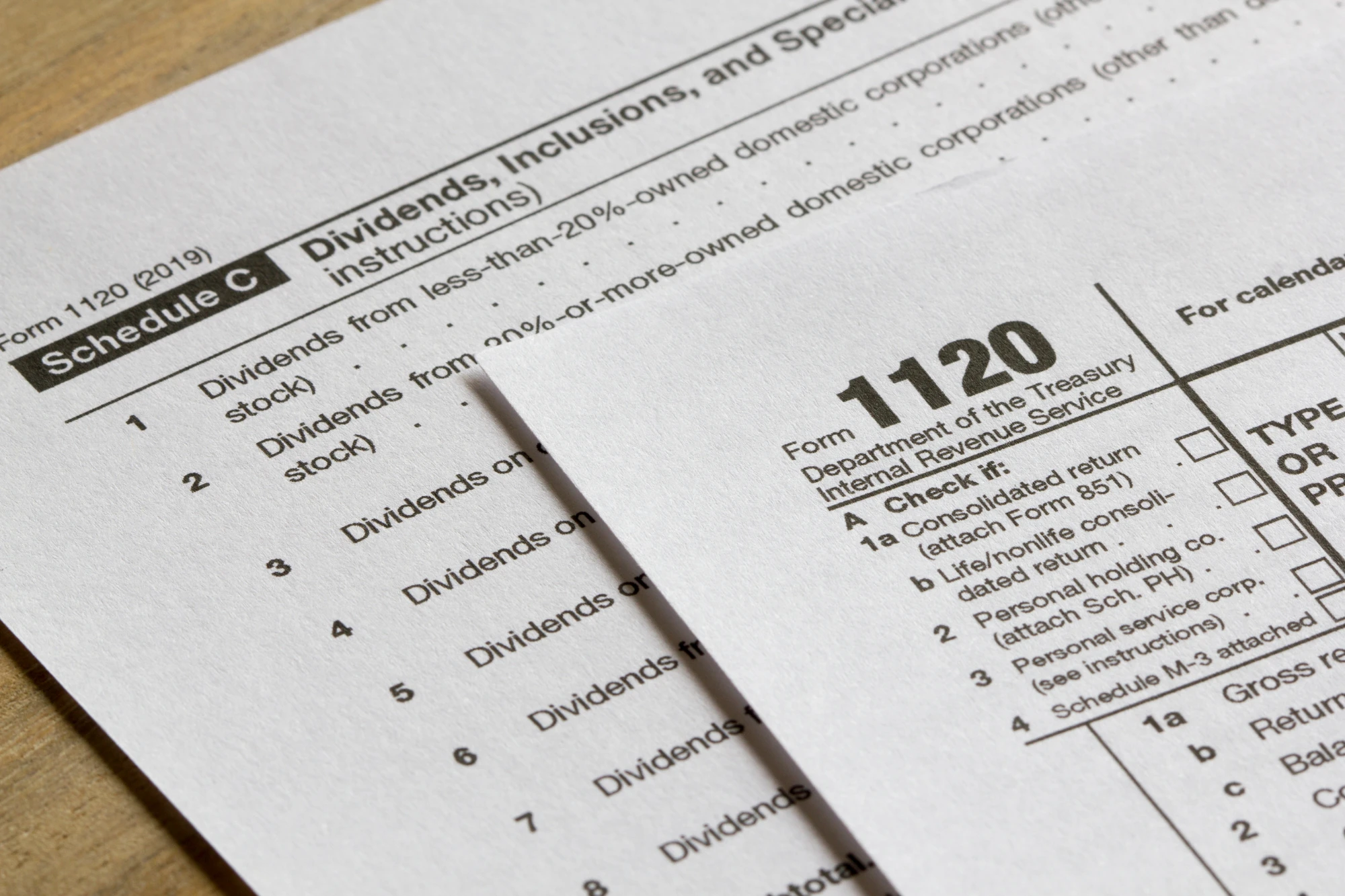
A US LLC is not automatically tax free for a foreign owner, and it is not automatically taxable either. What decides the outcome is where the income is earned, not where the owner lives. If a single-member LLC has no US trade or business and no effectively connected income, the owner generally owes no US federal income tax. The filings, however, are not optional: a foreign-owned single-member LLC has to submit Form 5472 with a pro-forma Form 1120 every year, even with zero revenue. Multi-member LLCs, US employees, US inventory and state-level obligations each change the answer.
How the IRS Sees Your LLC by Default
An LLC is a state-law creation. The IRS does not have an "LLC" tax box, so it assigns one automatically based on how many owners the company has and whether an election was filed.
Single-Member LLCs
By default a single-member LLC is a disregarded entity. The company does not pay tax of its own; the IRS looks straight through it to the owner. For a US owner that means the profit lands on a personal return. For a foreign owner it means the analysis moves to the owner's status as a non-resident alien and to the source of the income.
Being disregarded for income tax does not mean being invisible. The same company is treated as a separate corporation for information-reporting purposes, which is exactly why the Form 5472 obligation exists.
Multi-Member LLCs
Two or more owners and no election means the LLC is a partnership. It files a partnership return of its own and issues a Schedule K-1 to each member. This is a materially heavier regime for foreign members, because the partnership is generally required to withhold on income allocated to them and file the related withholding forms. The pass-through taxation logic still applies, but the compliance burden sits on the company, not just the owner.
LLCs That Elected Corporate Taxation
An LLC can file an election to be taxed as a corporation. From that moment it files Form 1120 and pays tax at company level, and the source-of-income analysis below becomes largely irrelevant, because a US corporation is taxed on its worldwide income. Founders weighing this should look at it before the first filing season, not during it.
The Question That Decides Your Tax Bill
For a disregarded LLC with a foreign owner, everything comes down to two linked concepts.
Engaged in a US Trade or Business
This is not defined by a checklist. It is a facts-and-circumstances test built on whether the business carries out considerable, continuous and regular activity inside the United States. Having a US LLC does not create it. Having a US bank account does not create it. Selling to US customers from abroad, on its own, usually does not create it either.
What tends to create it: employees or dependent agents working in the US, an office or warehouse, inventory physically stored in the US and sold from there, or personal services performed while physically present in the country.
Effectively Connected Income
If the business is engaged in a US trade or business, the income tied to that activity becomes effectively connected income and is taxed at graduated US rates, with deductions allowed. The owner files a personal non-resident return to report it. If there is no US trade or business, there is generally no effectively connected income, and the profit is not subject to US federal income tax at the owner level. The IRS definition is worth reading before you conclude which side you are on.
What Usually Is Not US-Source Income
Consulting or software work performed entirely from outside the United States for US clients. Dropshipping where the goods never sit in a US warehouse under your control. Digital products delivered from servers you do not staff. None of these are guarantees — they are the fact patterns that most often land outside the US net. Small changes, such as hiring a US-based contractor who acts on your behalf, can move a business from one column to the other.
When a Non-Resident Owner Owes US Tax
Situation | US trade or business | Federal income tax | Core filings |
|---|---|---|---|
Single-member LLC, owner abroad, no US presence | Usually no | Usually none | Form 5472 + pro-forma 1120 |
Single-member LLC with US staff or office | Yes | Yes, on ECI | 1040-NR + 5472 + 1120 |
FBA seller with US inventory | Often yes | Often yes | 1040-NR + 5472 + 1120 |
Multi-member LLC (partnership) | Depends | Depends | 1065 + K-1 + withholding forms |
LLC taxed as a corporation | Not relevant | Yes, company level | Form 1120 (+ 5472) |
Treat this as a map, not a ruling. The middle two rows are where most disputes happen, and both deserve a professional review of the actual facts.
What You Must File Even When You Owe Nothing
This is where most foreign founders get hurt, because "no tax" gets misread as "no paperwork".
A foreign-owned single-member LLC files Form 5472 attached to a pro-forma Form 1120 every year it exists. Reportable transactions are broader than people expect: capital the owner puts in, money the company sends back out, loans in either direction, and payments to a related company abroad all count. A company with no customers and no revenue still has a filing if the founder funded it.
The penalty attached to a missing Form 5472 is substantial, applies per form and per year, and is not reduced by the fact that no tax was owed. That combination — high penalty, zero tax — is precisely what catches people who assumed silence was safe.
Alongside that sit the practical prerequisites: the company needs an EIN before it can file anything, and an owner who has to submit a personal US return will usually need an ITIN. If you receive US-source payments personally, a W-8BEN is what tells the payer not to over-withhold.
State Taxes Are a Separate Question
Federal is only one layer. States run their own systems on their own calendars, and a clean federal position does not protect you at state level.
Most states charge a formation state a recurring fee to keep the company in good standing — the Delaware franchise tax is the best-known example, and missing it is one of the fastest ways to lose good standing. Many states also require an annual report on a fixed schedule.
Selling physical goods adds another layer entirely. Sales tax nexus can be created by inventory sitting in a warehouse or simply by crossing a state's sales threshold, and it is assessed state by state. It has nothing to do with whether you owe federal income tax. Some founders owe no federal tax at all and still have sales tax registrations in several states.
Which state you form in changes the cost and the paperwork, though it rarely changes the federal analysis.
The Cost of Getting It Wrong
Missed information returns are the expensive failure, not missed tax. Loss of good standing follows, then the practical consequences: banks freeze or close accounts during review, payment processors ask for documents the company cannot produce, and any future sale or funding round turns up the gap during diligence.
The other common failure is quieter. Founders who never set up bookkeeping cannot produce the numbers their filings require, so year one gets reconstructed under deadline pressure at several times the cost of doing it properly.
A Compliance Calendar for Foreign Owners
Keep books monthly, in US dollars, on a consistent basis. This is the foundation everything else sits on.
Track the corporate filings that recur annually: the federal information return, the state annual report, and the state's recurring fee. Each has its own deadline and none of them reminds you.
If the business does owe US tax, the payments are made through the year rather than in one lump sum at filing, so estimated tax payments belong in the calendar from the start.
Revisit the trade-or-business question every year. The answer changes when you hire, when you store inventory, or when you start travelling to the US for work.
Common Myths About LLC Taxes for Non-Residents
"A Wyoming or New Mexico LLC is tax free." The state does not decide federal taxability. The source of the income does.
"No tax means no filing." The opposite: the zero-tax cases are the ones with the harshest information-return penalties.
"My country has a tax treaty, so I am covered." A tax treaty can reduce or eliminate certain taxes, but treaty relief has to be claimed correctly, and it does not remove filing duties.
"I never took money out, so nothing happened." Contributions and loans are reportable transactions in their own right.
"My accountant at home handles it." Domestic accountants outside the US frequently do not know the 5472 regime exists.
Frequently Asked Questions
Do non-residents pay taxes on a US LLC?
Sometimes. If the LLC is engaged in a US trade or business, the related profit is taxed and the owner files a US non-resident return. If it is not, there is generally no US federal income tax at the owner level — but the annual information filings still apply.
Is a US LLC tax free for foreign owners?
Not as a rule. "Tax free" describes one specific fact pattern: a single-member LLC, no US presence, no US-source income. Change any of those and the answer changes.
Do I need an ITIN to own a US LLC?
Not to own one. You need it when you have to file a personal US return or claim certain treaty benefits. Many foreign owners of disregarded LLCs never reach that point.
Does an LLC with no income still file?
Yes, if it is foreign-owned. The information return obligation attaches to the company's existence and its transactions with its owner, not to its revenue.
Does a tax treaty help my LLC?
It can, mainly by limiting when a foreign resident is taxed on business profits and by reducing withholding on certain payments. Whether your country has one, and what it covers, has to be checked case by case.
Do I pay tax when I withdraw money from the LLC?
For a disregarded LLC, a withdrawal is not a separate taxable event — the profit was already attributed to you when it was earned. But the transfer itself is generally a reportable transaction on the annual information return.
The rules here are not complicated once you separate two questions: do you owe tax, and what do you have to file. Most foreign founders answer the first question correctly and then miss the second entirely. Clemta's federal tax filing service prepares Form 5472 and the accompanying return for foreign-owned LLCs, state tax filing covers the annual report and state-level obligations, and monthly bookkeeping keeps the records those filings depend on. Everything that follows incorporation is handled under post-incorporation support.

Begüm Tekin
Tax Operations Manager at Clemta