The Short Answer
A disregarded entity is a business that legally exists but is ignored by the IRS as a separate taxpayer. For a single-member LLC, this is the automatic default: the LLC keeps its liability shield and its own bank account, but its income flows straight onto the owner's tax return. Nothing is filed to get this status. It happens the moment your LLC is formed. The catch is that "disregarded" applies only to federal income tax. Your LLC is still a separate entity for employment taxes, for most state taxes, and — if you are a non-U.S. owner — for a reporting form that carries a 25,000 dollar penalty.
What Does "Disregarded Entity" Actually Mean?
The IRS classifies every business into one of three buckets for income tax: corporation, partnership, or disregarded entity. A single-member LLC lands in the third bucket by default under the entity classification rules, often called the check-the-box regulations.
Being disregarded does not mean your company is invisible or informal. Your LLC still holds contracts in its own name, still owns its own assets, still shields your personal property from business creditors, and still needs to keep its registered agent and annual state filings current. The only thing being disregarded is the tax wrapper. The IRS looks through the LLC and treats its activity as if you conducted it personally.
This is why founders sometimes hear the phrase "your LLC doesn't pay tax." That is accurate but incomplete. The LLC does not pay federal income tax as an entity. Someone still pays tax on the profit, and that someone is the owner.
How Pass-Through Taxation Works for a Single-Member LLC
Pass-through taxation means profit is taxed once, at the owner level, instead of twice as it would be in a C corporation where the company pays tax and then shareholders pay again on dividends.
If the owner is a U.S. person
You report the LLC's income and expenses on Schedule C attached to your personal Form 1040. Net profit is subject to income tax and, in most cases, self-employment tax. There is no separate business return, and there is no salary to yourself — money you take out is a draw, not payroll.
If the owner is a non-U.S. person
The analysis changes. Whether you owe U.S. income tax depends on whether the LLC has income effectively connected with a U.S. trade or business, and on any applicable treaty position. Many non-resident founders running a service or e-commerce business from abroad conclude they owe no U.S. income tax, but they still have filing obligations. Filing and owing are two different questions, and this is the single most expensive misunderstanding in this whole topic. Our guide on U.S. LLC tax for non-residents walks through the analysis in detail, and Form 1040-NR covers the personal return side.
Where Disregarded Status Stops: Taxes Your LLC Still Owes
Since 2009 the rules treat a disregarded entity as a separate corporation for employment tax purposes. If your LLC has employees, it withholds and deposits payroll taxes under its own EIN and files its own employment returns. The same separate-entity treatment applies to certain federal excise taxes.
Sales tax is also unaffected. If you have nexus in a state, your LLC registers and collects there regardless of how the IRS classifies it for income tax.
Do You Need an EIN for a Disregarded Entity?
Yes, in practice almost always. Although a U.S.-owner disregarded entity can sometimes report under the owner's Social Security number, you will need an EIN to open a business bank account, to onboard with payment processors and marketplaces, to hire anyone, and — critically for foreign owners — to file the reporting package described in the next section.
Getting one does not change your tax classification. An EIN is an identifier, not an election. If you are not sure how to obtain one without a U.S. Social Security number, start with our explainer on what an EIN is and how to get it, and see EIN vs ITIN if you are unclear which number you actually need.
Form 5472: The Filling Foreign-Owned LLCs Cannot Skip
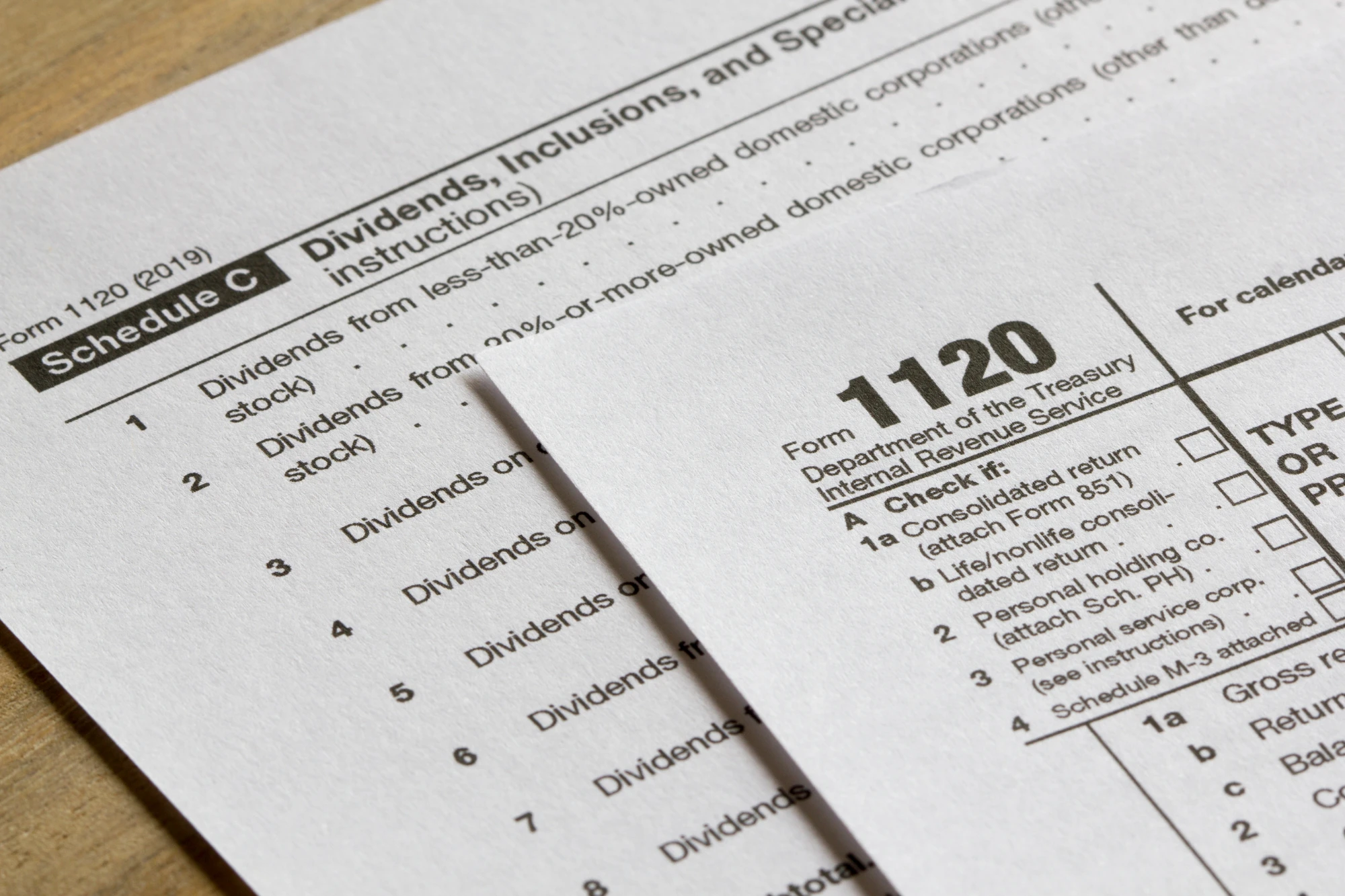
This is the part that catches founders by surprise. A foreign-owned single-member LLC that is treated as a disregarded entity must file Form 5472 together with a pro forma Form 1120 to report transactions between the LLC and its foreign owner. Capital you contributed, money you withdrew, and amounts paid to or from related parties all count as reportable transactions.
The obligation exists even if the LLC earned nothing, owes no tax, and never traded. A dormant foreign-owned LLC with a single capital contribution still has a filing. The penalty for failing to file is 25,000 dollars per form per year, and it is assessed automatically. Our dedicated Form 5472 guide covers what goes in each part.
Can You Change Your Tax Classification?
Yes. Default classification is a starting point, not a life sentence.
Electing corporate taxation
Filing Form 8832 elects to have the LLC taxed as a C corporation. The LLC then files its own Form 1120 and pays corporate income tax. Founders consider this when they want to retain earnings inside the company, when investors expect a corporate structure, or when the owner's personal rate is higher than the corporate rate.
Electing S corporation status
Form 2553 elects S corporation treatment, which can reduce self-employment tax for an active owner who pays themselves a reasonable salary. S corporations have strict shareholder eligibility rules, and non-resident aliens generally cannot be shareholders — so this route is usually closed to foreign founders.
Elections have timing rules and a five-year limit on switching back, so model the numbers before filing anything. If you are still deciding on structure entirely, compare LLC vs C corp first.
State Treatment Can Differ From Federal
Most states follow the federal classification, but not all of them do for every tax. A state may still impose a franchise tax, an annual report fee, a gross receipts tax, or an entity-level filing on your LLC regardless of its federal status. Delaware, for example, charges an annual franchise tax on LLCs that has nothing to do with income or with being disregarded. Check the rules for your formation state and for any state where you have operations.
Common Mistakes Founders Make
Assuming "no tax due" means "no filing due" is the big one. Second is mixing personal and business money, which weakens the liability protection the LLC was formed to provide — being disregarded for tax does not make commingling safe. Third is skipping the operating agreement because there is only one member; many banks ask for it, and it documents the separation between you and the company. Fourth is adding a second member without realizing the LLC stops being disregarded and becomes a partnership filing Form 1065.
Frequently Asked Questions
Is a disregarded entity the same as a sole proprietorship?
For federal income tax, a U.S.-owned single-member LLC is taxed much like a sole proprietorship. Legally they are very different: the LLC is a separate entity with liability protection, a sole proprietorship is not.
Does a disregarded entity file its own tax return?
Not for income tax, with one major exception: a foreign-owned single-member LLC files a pro forma Form 1120 with Form 5472 attached. It may also file employment and excise tax returns under its own EIN.
Can a disregarded entity have employees?
Yes. For payroll purposes it is treated as a separate entity and needs its own EIN to withhold and deposit employment taxes.
What happens if I add a partner?
The LLC becomes a multi-member LLC, is classified as a partnership by default, and begins filing Form 1065 with a Schedule K-1 to each member. The disregarded status ends on the date the second member is admitted.
Do I still need an operating agreement?
It is not federally required, but it is strongly recommended and some states and most banks expect it. See our guide on single-member LLC operating agreements.
Simplify Your LLC Compliance with Clemta
Disregarded status makes your tax life simpler, right up to the point where a missed Form 5472 costs 25,000 dollars. Clemta handles EIN applications, federal tax filings, and the annual compliance calendar for founders running U.S. LLCs from anywhere in the world — so the forms that carry penalties get filed on time, every year. Talk to our team about your entity and we will map exactly what your LLC owes and when.
This article is general information, not tax advice. Confirm your specific situation with a qualified tax professional before acting.

Begüm Tekin
Tax Operations Manager at Clemta