Short answer
If you're a non-U.S. resident and the only owner of a U.S. LLC that hasn't elected to be taxed as a corporation, you usually pay yourself with an owner draw. That means transferring money from the LLC's business account to your personal account.
No salary: You generally can't put yourself on payroll in this structure. The IRS treats you and your LLC as one taxpayer for income tax purposes.
No tax on the transfer itself: The draw isn't taxed as a separate payment. What matters is whether the LLC's income is taxable in the U.S. That depends on whether you have effectively connected income (ECI) and on any tax treaty with your country.
Reporting: Every transfer between you and your LLC is a reportable transaction on Form 5472.
When it's different: Form 1042-S and withholding usually come in when the LLC is taxed as a corporation (dividends) or has multiple owners (partnership withholding). They don't usually apply to a single-member owner draw.
This guide explains how it works. It doesn't replace advice on your own situation.
Most guides on how to pay yourself from an LLC are written for U.S. owners. They talk about self-employment tax, Schedule C and payroll, rules that often don't apply to you as a non-resident. This guide covers the foreign-owner side: how money actually leaves your LLC, when withholding applies, and what you have to report.
Owner Draw vs. Salary: Why It Matters
Owner draw | Salary (payroll) | |
|---|---|---|
What it is | A transfer of profit or capital from the LLC to you | Wages paid to an employee, with payroll tax withholding |
Who can use it | Owners of LLCs taxed as disregarded entities or partnerships | Employees, including owners of LLCs taxed as corporations |
Taxed at the moment of payment? | No. Tax is determined by the LLC's income, not the transfer | Payroll taxes and withholding may apply when paid |
Typical fit for a non-resident single owner | Yes, the default | Rarely, and only after a corporate tax election |
The choice isn't really yours to make freely. Your LLC's tax classification decides which methods are available.
How a Disregarded Entity Actually Works
By default, a single-member LLC is a disregarded entity: for federal income tax purposes, it is "disregarded as an entity separate from its owner." In practice:
- The LLC's income is your income. If it's taxable in the U.S., you report it on your own return (Form 1040-NR for non-residents).
- You can't be your own employee. IRS regulations treat a disregarded entity as a corporation for employment taxes in some situations, but not for employing its owner. So no W-2 for yourself.
- Self-employment tax usually doesn't apply. Per the IRS, nonresident aliens are generally not subject to U.S. self-employment tax, unless a Social Security (totalization) agreement says otherwise. This is a key difference from U.S.-focused guides.
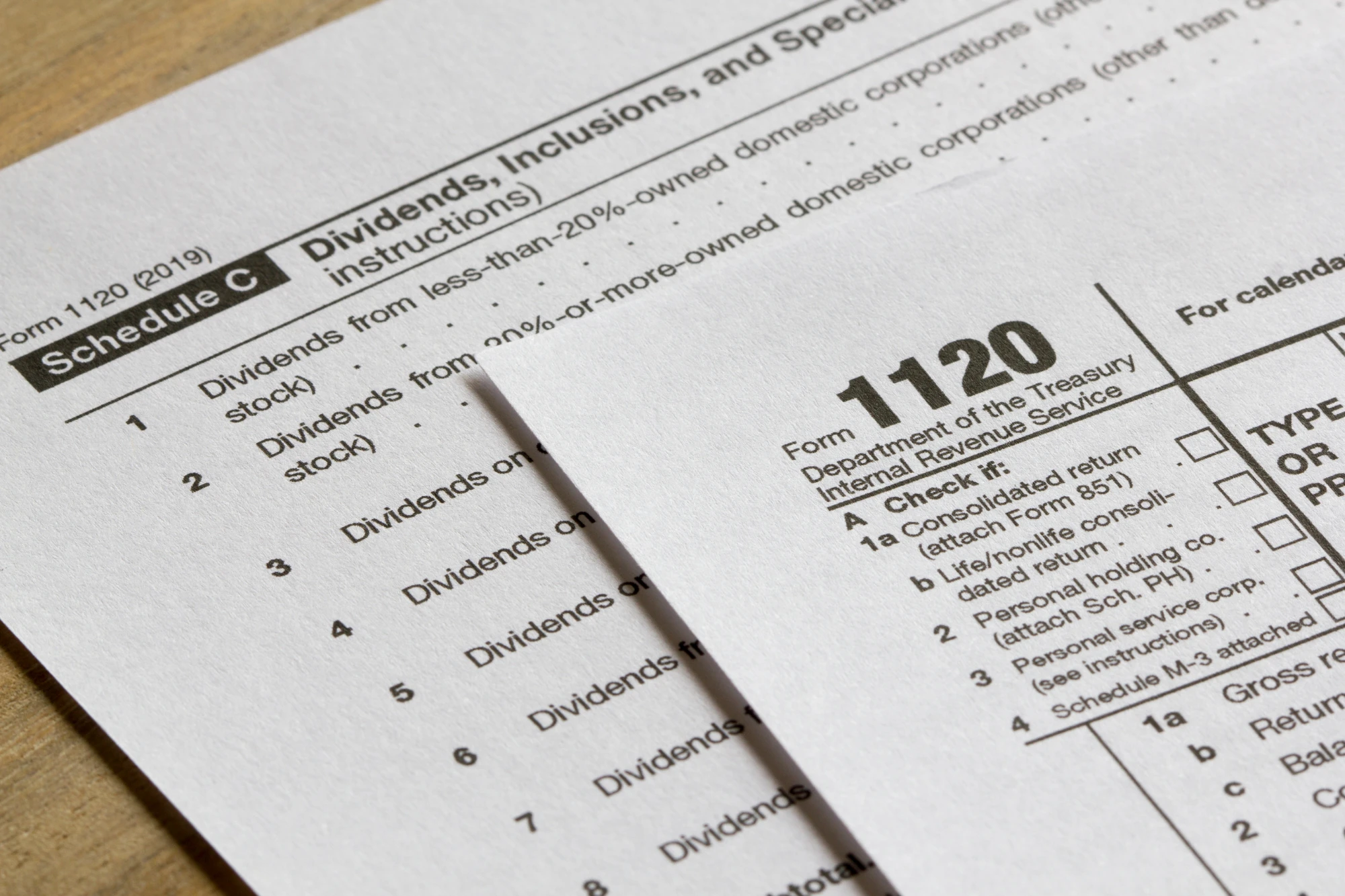
- The LLC still files. A foreign-owned disregarded entity files a pro forma Form 1120 with Form 5472 every year, even if it owes no tax.
For the full picture of what a foreign-owned LLC owes, see our guide to LLC taxes for non-residents.
Taking an Owner Draw: The Mechanics
Example: Say you're a software developer living in Vietnam. Your Wyoming LLC invoices clients, and payments land in its U.S. business account. Every month, you move part of the profit to your personal account at home.
- Keep business and personal accounts separate. Customer payments go into the LLC's account, never your personal one.
- Decide the amount. Leave enough in the LLC for upcoming expenses, taxes and fees.
- Transfer from the business account to your personal account. Use a wire or a transfer service. Avoid paying personal expenses directly with the business card.
- Label it as an owner draw in your books (a "distribution" or "owner's draw" account, not an expense).
- Keep the records. You'll need the total of draws, and of any money you put in, for Form 5472.
Putting money in counts too. If you fund the LLC from your personal account, for example to pay formation fees or a software subscription, that's a capital contribution. It's also reportable.
Not sure how to open the business account in the first place? See our guide to opening a U.S. business bank account as a non-resident.
When Payroll Makes Sense (and When It Doesn't)
Rarely, for a non-resident single owner. Payroll for yourself isn't available in a disregarded LLC. It can come up in these situations:
- The LLC elects to be taxed as a C-Corp (Form 8832) and a CPA designs your compensation. Even then, where you perform the work matters. Pay for services performed outside the U.S. is generally foreign-source income, which the U.S. generally doesn't tax for non-residents unless it's ECI.
- You hire employees in the U.S. That's a payroll for them, not for you.
What about S-Corp status? It isn't an option: an S corporation can't have nonresident alien shareholders.
Withholding: When the LLC Has to Withhold
This is where most confusion happens. Here is how the main structures compare:
Structure | What happens when money goes to the owner | Withholding? |
|---|---|---|
Single-member LLC, disregarded | Owner draw, a transfer within the same taxpayer | Generally no withholding on the draw itself. If there's ECI, you report and pay tax yourself on Form 1040-NR |
Multi-member LLC, partnership | Draws per the operating agreement | Possibly. If the LLC has ECI allocable to foreign partners, it must withhold under section 1446 regardless of whether it makes distributions (Forms 8804 and 8805) |
LLC taxed as a C-Corp | Salary for real work, profits as dividends | Dividends to a foreign owner are generally subject to withholding, which a treaty may reduce |
Any LLC paying other foreign persons (e.g., contractors working in the U.S., royalties) | A payment to someone else | Possibly, depending on the type and source of the payment |
Decision flow: which path applies to you?
1. How many owners does the LLC have?
- Two or more → Partnership rules (Form 1065, K-1s). If there's U.S. business income, check section 1446 withholding with a CPA.
- One → Go to step 2.
2. Has the LLC elected to be taxed as a corporation?
- Yes → Corporate path. Profits leave mainly as dividends, with possible withholding and Form 1042-S.
- No → Owner draw. Go to step 3.
3. Does the LLC have effectively connected income (ECI)? That is, is it engaged in a U.S. trade or business, for example with U.S. employees, an office, a warehouse or dependent agents in the U.S.?
- No → Under U.S. rules, foreign-source income of a nonresident alien is generally not taxed in the U.S. unless it's ECI. You still file the pro forma 1120 and Form 5472, and you may owe tax at home.
- Yes or not sure → You'll likely report the income on Form 1040-NR. Go to step 4.
4. Does your country have an income tax treaty with the U.S.?
- Yes → Under most U.S. treaties, business profits are taxable in the U.S. only if they're attributable to a permanent establishment there. Applying this takes analysis.
- No → ECI is taxed under the regular rules.
ECI and permanent establishment are fact-heavy questions. Two businesses that look similar can land on different sides. Have a CPA review yours before you assume an answer.
Tax Treaties and the Rate That Applies
The U.S. has income tax treaties with many countries, and each one is different. Treaties can:
- Reduce withholding on dividends, interest and royalties paid from the U.S.
- Limit U.S. tax on business profits to profits attributable to a U.S. permanent establishment (under most treaties)
- Define residency and tie-breaker rules
We don't list rates here on purpose. They differ by country, by income type and sometimes by ownership percentage. Claiming them requires the right documentation (for example, Form W-8BEN for individuals), and in some cases disclosure on your return. Your rate depends on your country's treaty. Ask a CPA to confirm it.
Where Form 1042-S Comes In
Form 1042-S reports U.S.-source income paid to foreign persons that's subject to withholding rules, whether or not tax was actually withheld. The payer (the "withholding agent") files it with the IRS and gives a copy to the recipient by March 15 of the following year, together with an annual Form 1042.
When your LLC would typically file one:
- It's taxed as a C-Corp and pays dividends to you or another foreign shareholder.
- It pays other foreign persons certain U.S.-source income, such as royalties or fees for services performed in the U.S.
When it typically wouldn't: for owner draws from a single-member disregarded LLC. Because the LLC is disregarded, the draw is generally treated as a transfer within the same taxpayer, not a dividend or a payment to a separate person.
Reporting the Transfer on Form 5472
For a foreign-owned disregarded entity, the IRS counts transfers between the LLC and its owner as reportable transactions. These include "contributions to, and distributions from, the entity." In practice, this means:
- Every owner draw you took during the year
- Every contribution you made, including formation costs you paid personally
- Other transactions with you or related parties, such as loans or payments for services
You report totals by transaction type on Form 5472, attached to a pro forma Form 1120, due April 15 for calendar-year LLCs (extendable with Form 7004). The penalty for not filing Form 5472 correctly and on time is $25,000. Clean books make this filing straightforward. Messy books make it stressful.
Common Mistakes
- Paying yourself a "salary" from a disregarded LLC. Issuing yourself a W-2 or a 1099 doesn't fit this structure.
- Paying personal expenses from the business account without recording them as draws.
- Assuming "no U.S. tax" means "no U.S. filing." The pro forma 1120 and Form 5472 are due either way.
- Ignoring your home country. Your country of residence may tax the LLC's profits, often whether or not you take them out.
How Clemta Helps
- Bookkeeping that records your draws and contributions in the right accounts all year
- Federal tax filing, including the pro forma 1120 and Form 5472 for foreign-owned LLCs
- CPA support for questions like ECI, treaties or a corporate tax election
Conclusion
For most non-resident single-member LLC owners, paying yourself means taking an owner draw: a documented transfer from the business account to your personal account. The draw itself usually isn't the taxable event. Your U.S. tax picture depends on whether the LLC has ECI and what your treaty says. Whatever the answer, every transfer goes on Form 5472. Get the structure confirmed by a CPA once, keep clean books, and paying yourself becomes routine.
This content is for general information only and is not tax or legal advice for your situation. Tax treatment depends on your facts, your country of residence and any applicable treaty. Consult a qualified tax professional.
FAQ
How do I pay myself from an LLC as a non-resident?
If you're the only owner and the LLC has its default tax status, by owner draw: a transfer from the LLC's business account to your personal account. Record it and report it on Form 5472.
Can a single-member LLC pay its owner a salary?
Not under the default classification. The owner of a disregarded LLC can't be its employee. A salary is only possible if the LLC elects to be taxed as a corporation, which has its own consequences.