Quick answer
Form 8822-B is the IRS form a business uses to report a new mailing address, a new business location, or a new responsible party (the person who ultimately controls the entity). Any entity with an EIN must report a responsible party change within 60 days. The form is mailed, not filed online, to one of two IRS addresses — Kansas City, MO or Ogden, UT — depending on where your old business address was. If your old address was outside the United States, it goes to Ogden. Processing generally takes 4 to 6 weeks. There is no filing fee.
Key takeaways
- What it changes: your business mailing address, business location, and/or responsible party on IRS records — tied to your EIN.
- What it doesn't change: your registered agent, your company's legal address with the state, or your business name.
- Deadline: 60 days for a responsible party change. IRS guidance also asks you to report address changes within 60 days.
- Who signs: an officer, owner, LLC member or manager, or an authorized representative with a power of attorney.
- Why it matters for non-residents: if the IRS has an old address, you can miss notices that come with response deadlines — and the clock runs whether you received them or not.
If you run a US LLC from outside the country, your address on IRS records is easy to forget. You set it once on Form SS-4 when you applied for your EIN, and then life moves on: you switch registered agents, move to a new country, or bring in a new owner. Form 8822-B is how you bring the IRS up to date. This guide walks you through when you need it, how to fill it out line by line, and exactly where to mail it.
What Is IRS Form 8822-B and When Do You Need It?
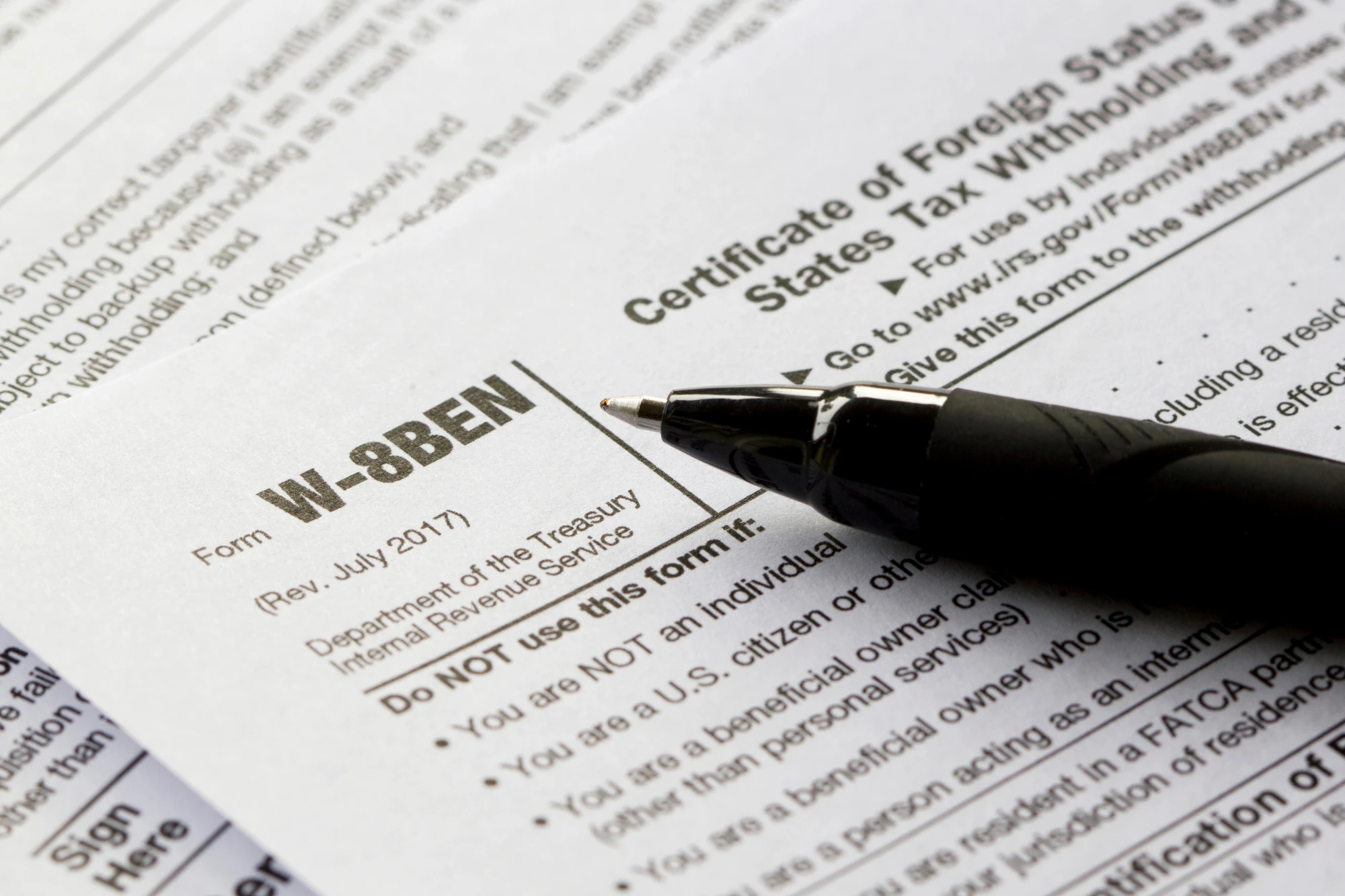
IRS Form 8822-B, Change of Address or Responsible Party — Business, is a one-page form that updates the contact and control information the IRS holds for your EIN. Think of it as the "update my details" form for everything you originally reported on Form SS-4.
You need it in three situations:
- Your business mailing address changed — where the IRS sends letters and notices.
- Your business location changed — the physical place where the business operates, if different from the mailing address.
- Your responsible party changed — a new person now owns or controls the entity.
It applies to LLCs, corporations, partnerships, trusts, estates and tax-exempt organizations alike. If the entity has an EIN, it can (and sometimes must) use this form.
Form 8822 vs. Form 8822-B: Form 8822 is for individuals changing their home address. Form 8822-B is for businesses. If you moved personally and your company's address also changed, you may need both.
Address Change vs. Responsible Party Change: Two Different Situations
Although both live on the same form, these are two different updates with different rules.
Address change | Responsible party change | |
|---|---|---|
Lines used | 5, 6 and/or 7 | 8 and 9 |
Typical trigger | New mail-forwarding address, new office, founder relocates | Ownership transfer, new principal officer, exit of a co-founder |
Deadline | The form doesn't set one, but IRS guidance asks for updates within 60 days | Within 60 days of the change |
Main risk of skipping | IRS notices go to the wrong place | The IRS treats the wrong person as the one in control |
You can report both on a single Form 8822-B if they happen at the same time.
Who Counts as the "Responsible Party"?
The IRS defines the responsible party as the person who ultimately owns or controls the entity, or who exercises ultimate effective control over it — meaning they can, directly or indirectly, manage the entity and decide what happens to its funds and assets.
A few rules worth knowing:
- It must be an individual, not a company — unless the applicant is a government entity.
- For a corporation, it's typically the principal officer. For a partnership, a general partner. For a single-member LLC, it's usually the owner.
- It cannot be a nominee. A formation agent or someone with limited authority to set up the company is not a responsible party. If a nominee was listed on your original SS-4, the IRS says you should correct it and identify the real responsible party.
How to Change the Responsible Party on Your EIN
You change the responsible party by completing lines 8 and 9 of Form 8822-B:
- Line 8: the new responsible party's full name.
- Line 9: their SSN, ITIN, or (only in limited cases) EIN.
What if the new responsible party is a non-resident with no SSN or ITIN? The Form SS-4 instructions — which Form 8822-B points to for this line — say to enter "Foreign" or "N/A" when the person doesn't have and isn't eligible for an SSN or ITIN.
The 60-Day Rule Explained
The IRS rule is direct: any entity with an EIN must report a change in its responsible party within 60 days of the change.
The 60 days start from the date the change actually takes effect — for example, the date a membership interest transfer is signed, or the date a new principal officer takes over. Not the date you remember to deal with it.
Example: You and a co-founder own a Delaware LLC. On March 1, you buy out her 60% stake and become the sole owner and manager. If she was the responsible party on the EIN, you'd want Form 8822-B in the mail by around April 30.
Note: If the ownership change also changes how your LLC is classified for tax purposes — for example, a single-member LLC becoming a multi-member LLC — Form 8822-B may not be the whole story. Some structural changes require a new EIN. Check this with a tax professional before filing.
Form 8822-B Instructions: How to Fill It Out, Line by Line
Here is a plain-English walkthrough of the 8822-B instructions. The form is short; most mistakes come from checking the wrong box or leaving the EIN out.
Lines 1–3: Check what the change affects
- Line 1 — Employment, excise, income and other business returns. Check this for most LLCs and corporations. It covers returns such as Forms 941, 1065 and 1120 (including the pro forma 1120 that foreign-owned single-member LLCs file with Form 5472).
- Line 2 — Employee plan returns (Forms 5500, 5500-EZ). Only relevant if your business sponsors a retirement plan.
- Line 3 — Business location. Check this if the physical location changed, then complete line 7.
There's also a checkbox at the top for tax-exempt organizations.
Lines 4a–4b: Identify the business
- 4a: Business name, exactly as it appears on IRS records (your EIN confirmation letter, CP 575, is the best reference).
- 4b: Your EIN.
Lines 5–7: Old and new addresses
- Line 5: Old mailing address.
- Line 6: New mailing address.
- Line 7: New business location, if different.
Three formatting rules from the IRS:
- P.O. boxes: only use one if the post office doesn't deliver to your street address.
- Foreign addresses: follow the country's postal code format and don't abbreviate the country name.
- "In care of" addresses: if mail goes to an accountant, attorney or similar third party, enter "C/O" followed by their name and address.
Lines 8–9: New responsible party
Complete these only if the responsible party changed. See the section above for what to enter if the new person has no SSN or ITIN.
Signature section
An officer, owner, general partner, LLC member or manager, plan administrator, fiduciary or authorized representative must sign and date the form, and include their title. If a representative signs on your behalf, attach a copy of the power of attorney (for example, Form 2848).
Tip: Before you mail anything, make a copy of the signed form for your records, and use a trackable delivery method. If there's ever a question about when you notified the IRS, that proof matters.
8822-B Mailing Address: Where to Mail It (by State)
This is where most people get stuck. The IRS uses two different processing centers, and the right one depends on where your old business address was — not the new one, and not necessarily the state your LLC was formed in.
The two addresses:
- Kansas City: Internal Revenue Service, Kansas City, MO 64999
- Ogden: Internal Revenue Service, Ogden, UT 84201-0023
Most common cases for non-resident founders
If the IRS has your old address in… | Mail Form 8822-B to | Good to know |
|---|---|---|
Delaware | Kansas City, MO 64999 | Typical for Delaware LLCs and C-Corps using a Delaware address |
Wyoming | Ogden, UT 84201-0023 | Typical for Wyoming LLCs using a Wyoming address |
Florida | Ogden, UT 84201-0023 | |
Texas | Ogden, UT 84201-0023 | |
New York | Kansas City, MO 64999 | |
Any place outside the United States | Ogden, UT 84201-0023 | Applies if you listed your foreign home address on Form SS-4 — whatever your state of formation |
Full list: which states go where
Kansas City, MO 64999 | Ogden, UT 84201-0023 |
|---|---|
Connecticut, Delaware, District of Columbia, Georgia, Illinois, Indiana, Kentucky, Maine, Maryland, Massachusetts, Michigan, New Hampshire, New Jersey, New York, North Carolina, Ohio, Pennsylvania, Rhode Island, South Carolina, Tennessee, Vermont, Virginia, West Virginia, Wisconsin | Alabama, Alaska, Arizona, Arkansas, California, Colorado, Florida, Hawaii, Idaho, Iowa, Kansas, Louisiana, Minnesota, Mississippi, Missouri, Montana, Nebraska, Nevada, New Mexico, North Dakota, Oklahoma, Oregon, South Dakota, Texas, Utah, Washington, Wyoming, any place outside the United States |
Why this trips up Delaware and Wyoming LLC owners
Two of the most popular states for non-resident founders go to different centers. A Delaware LLC whose old IRS address was in Delaware mails to Kansas City. A Wyoming LLC with an old Wyoming address mails to Ogden.
But here's the catch: what counts is the address the IRS has on file, not your state of formation. If you listed your home address abroad on Form SS-4, your "old business address" is outside the US — so the form goes to Ogden, even for a Delaware LLC.
Real Scenario: The Founder Moves to Another Country
Let's make this concrete. Say you're a Turkish founder who formed a Wyoming LLC two years ago. When you applied for the EIN, you listed your apartment in Istanbul as the mailing address. This year you relocate to Dubai.
What changes on IRS records?
- Mailing address — yes. If the IRS still has your Istanbul address, any notice about your Form 5472 or pro forma 1120 goes there. Complete lines 5 and 6.
- Responsible party — no. You still own and control the LLC. Moving countries doesn't change who the responsible party is, so lines 8 and 9 stay blank.
- Where to mail it: your old address was outside the US, so the form goes to Ogden, UT.
A practical alternative: many non-resident founders use a US mailing address (for example, a business address with mail forwarding) on IRS records instead of a personal foreign address. That way, the next time you move, your IRS address doesn't have to change at all. Just remember: if you later switch that US address provider, that's an address change too.
Now add a twist: six months later, you sell the LLC to a buyer in Germany who has no SSN or ITIN. That is a responsible party change. The 60-day clock starts on the date of the sale, and line 9 would be completed as "Foreign" or "N/A" per the SS-4 guidance. Because a sale can raise other tax and EIN questions, this is a good moment to involve a tax professional.
If you're relocating the company itself, not just yourself, read our guide to moving your company to another state.
How Long Does Form 8822-B Take, and How Do You Confirm It?
The IRS says processing generally takes 4 to 6 weeks, and mail delays can push it longer. To confirm the update:
- CP148A / CP148B notices: the IRS sometimes sends these to your new and old address — mainly for businesses with employment tax filings — so not receiving one isn't a problem by itself.
- Letter 147C: an EIN verification letter that arrives at your new address is a good sign the change went through. Banks often ask for it anyway.
- Mailing proof: keep the tracking number and a dated copy of the signed form.
No confirmation letter within 60 days? The IRS says to mail a copy of your Form 8822-B with "Second Request" written on it.
What Happens If You Don't File Form 8822-B?
The form doesn't list a specific penalty for skipping it, but the practical consequences can cost more:
- Missed IRS notices. Penalty and deficiency notices go to the address on file. For foreign-owned LLCs, a missed Form 5472 notice can be costly — and response deadlines run from the mailing date, not the day you see the letter.
- The wrong person stays "in control." A former co-founder may keep receiving your company's IRS mail while you struggle to get information about your own EIN.
- Bank and platform mismatches. If IRS records don't match your documents, reviews at banks, Stripe or Amazon can stall.
- Breaking the 60-day rule. For responsible party changes, filing is an IRS requirement, not a courtesy.
If you've missed it, file as soon as you notice — late is better than never.
Changing Your Registered Agent vs. Changing Your Address
This is one of the most common mix-ups for non-resident founders.
Your registered agent is a state-level matter. It's the person or company that receives legal documents for your LLC in its state of formation. You change it by filing with the state (usually the Secretary of State), not the IRS. Form 8822-B doesn't change your registered agent.
Your IRS address is a federal matter. It's where the IRS sends tax correspondence for your EIN. You change it with Form 8822-B, not with the state.
Where they overlap: if you use your registered agent's address (or their mail-forwarding service) as your IRS mailing address, switching providers means you need to update both — the state filing for the registered agent, and Form 8822-B for the IRS.
What changed | File with the state? | File Form 8822-B? |
|---|---|---|
New registered agent only (IRS address unaffected) | Yes | No |
New registered agent whose address you also use for IRS mail | Yes | Yes |
New mail-forwarding or office address | Depends on state records | Yes |
New owner / principal officer | Possibly (amendment or annual report) | Yes, within 60 days |
Business name change | Yes | No — name changes follow a different IRS process |
An ownership change usually means updating your operating agreement and other post-incorporation documents as well, not just your IRS records.
How Clemta Helps You Stay on Top of These Changes
Form 8822-B is short, but it's easy to forget — because nothing reminds you that your IRS address is out of date until a notice goes missing.
Clemta is built to keep that kind of detail from slipping:
- A US business address with mail forwarding, so your IRS correspondence has a stable US address even when you move between countries.
- Registered agent service, so state-level legal mail has a reliable home.
- Compliance reminders that flag upcoming federal and state obligations in one dashboard.
- Secure document storage for your EIN letter, Form 8822-B copy and mailing proof — so you can find them when a bank or the IRS asks.
If you're about to restructure ownership or relocate, talking it through early helps you spot every filing the change triggers — not just this one.
Conclusion
Form 8822-B is one of the simplest IRS forms you'll ever complete, and one of the easiest to overlook. Remember three things: report a responsible party change within 60 days, mail the form to the processing center that matches your old address, and keep proof of when you sent it.
If you're still setting up your US company, start with Clemta and build on a structure that's easier to keep up to date.
FAQ
Can I file Form 8822-B online?
No. Form 8822-B is a paper form mailed to the IRS. The form's instructions only provide mailing addresses for Kansas City, MO and Ogden, UT.
Do I need Form 8822-B if I only changed my registered agent?
Only if your IRS mailing address was the registered agent's address. A registered agent change on its own is a state filing.
What if the new responsible party is a non-US person with no SSN or ITIN?
Following the Form SS-4 guidance, enter "Foreign" or "N/A" on line 9. If the person already has an ITIN, enter the ITIN instead.
Where do I mail Form 8822-B if my company is in Delaware but I live abroad?
It depends on the old address the IRS had. If it was a Delaware address, mail to Kansas City. If it was your foreign address, mail to Ogden.
This article is for general information only and isn't tax or legal advice. IRS procedures and addresses can change; check the current Form 8822-B instructions on IRS.gov and consult a qualified professional about your specific situation.

Begüm Tekin
Tax Operations Manager at Clemta