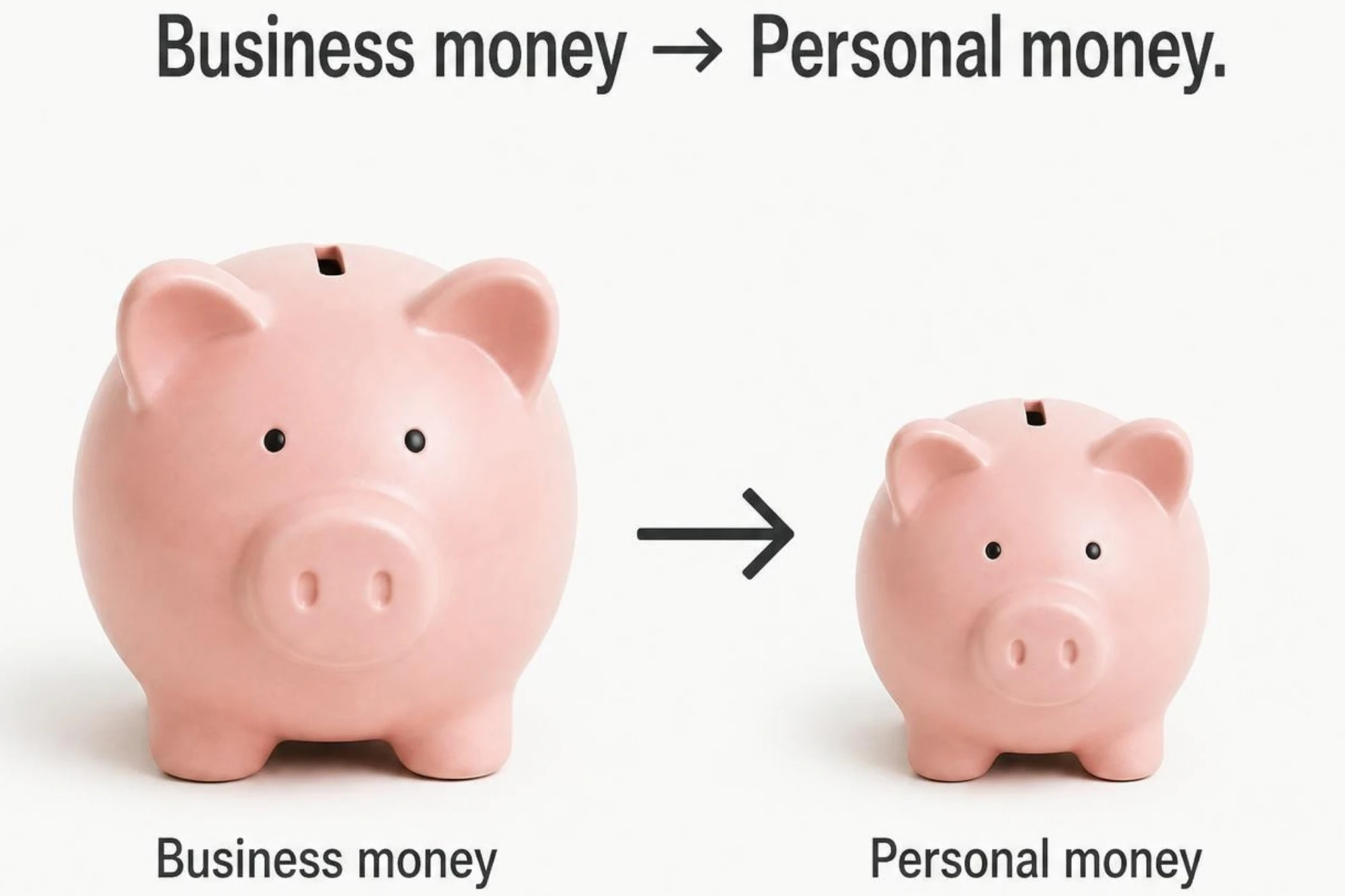
Short answer: Form 8832 (Entity Classification Election) tells the IRS how to tax your LLC. Without it, a single-member LLC is a disregarded entity and a multi-member LLC is a partnership. Filing it lets the LLC be taxed as a corporation instead.
For most non-resident owners with no U.S. trade or business, a corporate election usually doesn't help. A U.S. corporation pays 21% federal tax on its worldwide taxable income, and dividends to you are generally subject to 30% withholding (or a lower treaty rate).
It can make sense when the LLC already has substantial U.S.-taxed income (for example, U.S. staff or a U.S. warehouse) and you want the company, not you personally, to file and pay.
Timing: the election can take effect up to 75 days before or 12 months after filing. After a change, you generally can't change again for 60 months.
It changes tax treatment only. Your LLC stays an LLC under state law.
This is a structural tax decision. Run the numbers with a CPA (and an adviser in your home country) before filing.
If you own a U.S. LLC from abroad, you've probably seen advice like "just elect C-Corp taxation." Form 8832 is the form that does it, but whether it helps depends on where your income is earned and how your home country treats it.
What Form 8832 Does (and What It Doesn't)
Form 8832 is the IRS form an "eligible entity" (such as an LLC) uses to choose its federal tax classification, or to change it.
What it does:
- Changes how the IRS taxes the LLC: as a corporation, a partnership or a disregarded entity
- Changes which federal returns the LLC files
What it doesn't do:
- It doesn't turn your LLC into a corporation under state law. You still file the LLC's annual report and pay its state fees.
- It doesn't create stock you can issue to investors.
- It isn't used for S-Corp status (see below).
- It doesn't give you a new EIN. The LLC keeps its existing EIN, and it must have an EIN before filing.
Default Classification: Disregarded Entity vs. Partnership
If you never file Form 8832, the IRS applies default rules to a U.S. LLC:
LLC type | Default classification | Federal filing for a foreign-owned LLC |
|---|---|---|
One member | Disregarded entity: income flows to the owner | Form 5472 + pro forma Form 1120 when there are transactions with the owner; owner files Form 1040-NR only if there is U.S.-taxed income |
Two or more members | Partnership | Form 1065, K-1s, and withholding on income connected with a U.S. business allocated to foreign partners |
For a single foreign owner, the key question under the default is whether the LLC has effectively connected income (ECI), meaning income connected with a U.S. trade or business. Without ECI, a disregarded LLC owned by a non-resident may owe no U.S. federal income tax at all. With ECI, the owner is taxed on it at regular rates. Our guide to effectively connected income explains how ECI is decided. For more on the default, see what a disregarded entity is.
Electing Corporate Tax Treatment: What Changes for a Foreign Owner
Once a corporate election takes effect, the LLC is treated as a U.S. (domestic) corporation for federal tax purposes. Three things change:
1. The LLC itself pays tax. The federal corporate rate is a flat 21% of taxable income. A domestic corporation is taxed on its worldwide income, not only its U.S. income. This is the point many foreign owners miss: income that was outside U.S. tax as a disregarded LLC can become taxable once the LLC is a corporation.
2. Paying yourself changes. Profits you take out are generally dividends. U.S. dividends paid to a foreign person are generally subject to 30% withholding, or a lower rate if your country has a tax treaty with the U.S. and you document it (usually with Form W-8BEN). The corporation withholds the tax and reports it.
3. Filings change. The LLC files a full Form 1120. A U.S. corporation that is 25% or more foreign-owned also attaches Form 5472, so the 5472 obligation doesn't go away.
Your home country matters too. Some countries treat a U.S. LLC as transparent and others as a company. Some have controlled foreign company (CFC) rules that may tax you on the corporation's profits anyway, and tax credits may not line up. Check this locally before you elect.
When It Can Make Sense, and When It Usually Doesn't
Situation | Default | After a corporate election | Who it tends to suit |
|---|---|---|---|
One foreign owner, all work done abroad, no U.S. office or staff | Disregarded; often no U.S. income tax, only 5472 + pro forma 1120 | 21% on worldwide taxable income + withholding on dividends | Usually not a fit: adds U.S. tax that may not exist today |
One foreign owner with substantial ECI (U.S. warehouse, U.S. staff, owner working in the U.S.) | Owner taxed on ECI at graduated rates and files 1040-NR | LLC pays 21%; owner taxed through dividend withholding when profits are paid out | Can fit, especially if profits stay in the business. Compare both with a CPA |
Several foreign partners with ECI | Partnership; withholding on partners' share of ECI; each partner may file a U.S. return | One corporate return; partners generally don't file for the business income itself | Can fit when partner-level filings are the main burden |
Raising venture capital or issuing stock options | Any | Still an LLC under state law; no shares | Not the right tool. Investors usually expect an actual corporation, which means a conversion, not an election |
Small online business planning to take out most profits | Disregarded | Corporate tax + dividend withholding on the same profits | Usually not a fit: two layers of tax on money you withdraw |
An example (fictional): Mateo lives in Spain and owns Quillbrook Studio LLC, a Wyoming single-member LLC. Until 2026 he ran it entirely from Spain, so it had no ECI. In 2027 he hires a U.S. employee and rents a small warehouse in Texas (which also brings Texas registration and franchise tax obligations), and most of his income becomes ECI. Now a corporate election is worth comparing. Had he stayed fully remote, the same election would likely have created a U.S. tax bill he didn't have before.
None of this means a corporate election "saves tax." It moves the tax to a different place and timing. Whether that helps depends on the numbers and on your home country.
Form 8832 vs. Form 2553: Why S-Corp Status Isn't Available to Non-Resident Owners
Form 2553 is the S-Corp election. An S corporation cannot have nonresident alien shareholders, so a non-resident owner can't use it.
An LLC that files a valid Form 2553 is treated as a corporation from the S election's effective date and doesn't need Form 8832. That route doesn't apply here. For a foreign owner, the corporate option is Form 8832 electing C-Corp treatment.
For the broader comparison, see LLC vs. C-Corp business structures.
Timing Rules: Effective Date, Look-Back Window and the 60-Month Limit
Effective date (line 8):
- No earlier than 75 days before the filing date
- No later than 12 months after the filing date
- If you choose a date earlier than 75 days, the election takes effect 75 days before filing; if you leave it blank, it takes effect on the filing date
60-month limit: After an election that changes classification, the LLC generally can't change again by election for 60 months from the effective date. The limit doesn't apply when the earlier election was a newly formed LLC's initial classification effective on its formation date. The IRS may allow an earlier change by private letter ruling if more than 50% of the ownership has changed.
Missed the window? Late election relief (Part II of the form, under Rev. Proc. 2009-41) may be available if you file within 3 years and 75 days of the requested effective date, have reasonable cause, and have filed returns consistent with the classification you wanted. Otherwise, a private letter ruling with a user fee is the remaining route.
Year-end tip: If you're deciding now, a January 1 effective date keeps the change aligned with a calendar tax year. A date mid-year means the LLC files under two classifications for that year.
How to Fill Out Form 8832, Line by Line
Here's how Mateo's form would look for an election effective January 1, 2027. Read the current IRS form and instructions alongside it.
Part I — Election Information
Line | What it asks | Mateo's answer |
|---|---|---|
Top | LLC name, EIN, address | Quillbrook Studio LLC, its EIN, its U.S. address |
1 | Initial classification (1a) or change (1b) | 1b: the LLC has been disregarded since 2024 |
2a / 2b | Any election in the last 60 months? | No, so he skips to line 3 |
3 | More than one owner? | No |
4a / 4b | Owner's name and identifying number | His name; his ITIN if he has one, otherwise "none" |
5 | Owned by a consolidated corporate group? | Leave blank |
6 | Classification chosen | 6a: domestic eligible entity electing to be taxed as a corporation |
7 | Foreign country of organization | Blank (it's a U.S. LLC) |
8 | Effective date | 01/01/2027 (filed in November, so within 12 months) |
9 / 10 | Contact person and phone | Mateo, or his CPA |
Consent statement: Every member signs, or an authorized officer, manager or member. As the sole member, Mateo signs.
Part II — Late Election Relief: Only if you're asking for relief. Mateo leaves it blank.
Where to file: By mail. The address depends on where the LLC is located; for a Wyoming LLC, the IRS's current list gives Ogden, UT 84201. The IRS updated these addresses after the form was printed, so use the latest list on the IRS Form 8832 page.
After filing: The IRS usually sends an acceptance or non-acceptance notice within about 60 days; keep it with your records. Attach a copy of Form 8832 to the LLC's federal return for the year of the election.
What You File After the Election
Filing | When | Notes |
|---|---|---|
Form 1120 + Form 5472 | Every year; April 15 for a calendar-year corporation (extendable with Form 7004) | Full corporate return, not the pro forma version. The $25,000 penalty for a late or incomplete 5472 still applies |
Forms 1042 and 1042-S | In years the LLC pays you dividends | Report the tax withheld on dividends to a foreign owner |
State annual report and fees | Same as before | Still an LLC under state law |
State income or franchise tax | Depends on the state | Some states tax an LLC that elected corporate treatment as a corporation. Wyoming has no corporate income tax; Florida does |
Clemta's federal tax filing service prepares the 1120 and 5472 for foreign-owned companies. For the current pro forma setup, see our line-by-line guide to Form 5472.
Changing Your Mind Later
Switching back from corporate to disregarded (or partnership) treatment is possible, but:
- The 60-month limit usually applies from the date of your corporate election.
- Going back is treated as a liquidation. The corporation is treated as distributing all its assets to you, which can trigger tax at both the company and the owner level.
So treat Form 8832 as a long-term decision, not a one-year experiment.
FAQ
Do I have to file Form 8832?
No. You only file it to choose a classification other than the default, or to change it. Most single-member LLCs owned by non-residents never file one.
Does Form 8832 make my LLC a C-Corp?
Only for federal tax purposes. Under state law it remains an LLC, with no shares to issue.
Can a non-resident file Form 8832?
Yes. The LLC needs an EIN. If the owner has no U.S. taxpayer number, the instructions allow "none" on line 4b. A non-resident can't elect S-Corp status, though.
Get the Decision Right Before You File
Form 8832 is one page, but the decision behind it shapes your taxes for at least five years. Clemta's tax team can help you compare your current treatment with a corporate election and prepare the 1120 and 5472 that follow. Start with our federal tax filing service.
This content is for general information and is not tax or legal advice. Consult a U.S. CPA and an adviser in your country of residence before making an entity classification election.

Begüm Tekin
Tax Operations Manager at Clemta