Deciding to close your business is often harder than starting it. Whether you are pivoting to a new idea or simply moving on, shutting down your US LLC requires more than just zeroing out your bank account.
Many international founders make the mistake of "ghosting" their LLC. They stop using it and assume it will disappear.
In the US, this is a costly error.
Until you formally dissolve your company, the state considers you active. This means you are still liable for Annual Franchise Taxes, Registered Agent fees, and federal reporting requirements. If you ignore these, the state can levy heavy fines and penalties that can follow you to your next venture.
Here is the technical directive on how to properly dissolve your US LLC in 2026.
1. The "Vote" and the Operating Agreement
Before you file any government forms, you must follow your own internal rules.
Your Operating Agreement—the document you likely created when you formed the company—contains specific instructions for dissolution.
- Review the Requirements: Most agreements require a formal vote by the members (owners).
- Document the Vote: Even if you are the sole owner, you should create a written resolution stating that you have decided to dissolve the LLC. Keep this in your digital records.
Why this matters: If you have partners and you skip this step, they could legally challenge the dissolution later, claiming you acted without authority.
2. Tax Clearance and IRS Forms
You cannot close a business that owes money to the government.
Before the state will let you leave, you must ensure your tax ledger is clean.
- File Your Final Federal Tax Return: Whether you file Form 1120 (for C-Corps) or Form 1065 (for Partnerships), you must check the box that says "Final Return" near the top of the form. This tells the IRS to stop expecting future returns from you.
- Form 966 (Corporate Dissolution): If your LLC is taxed as a corporation, you must file Form 966 with the IRS within 30 days of your decision to dissolve.
- State Tax Clearance: Some states (like New York) require you to pay back taxes and get a "Tax Clearance Certificate" before they will process your dissolution. Delaware and Wyoming are generally simpler but still require you to be up-to-date on Franchise Taxes.
3. File Articles of Dissolution
This is the official "death certificate" for your company.
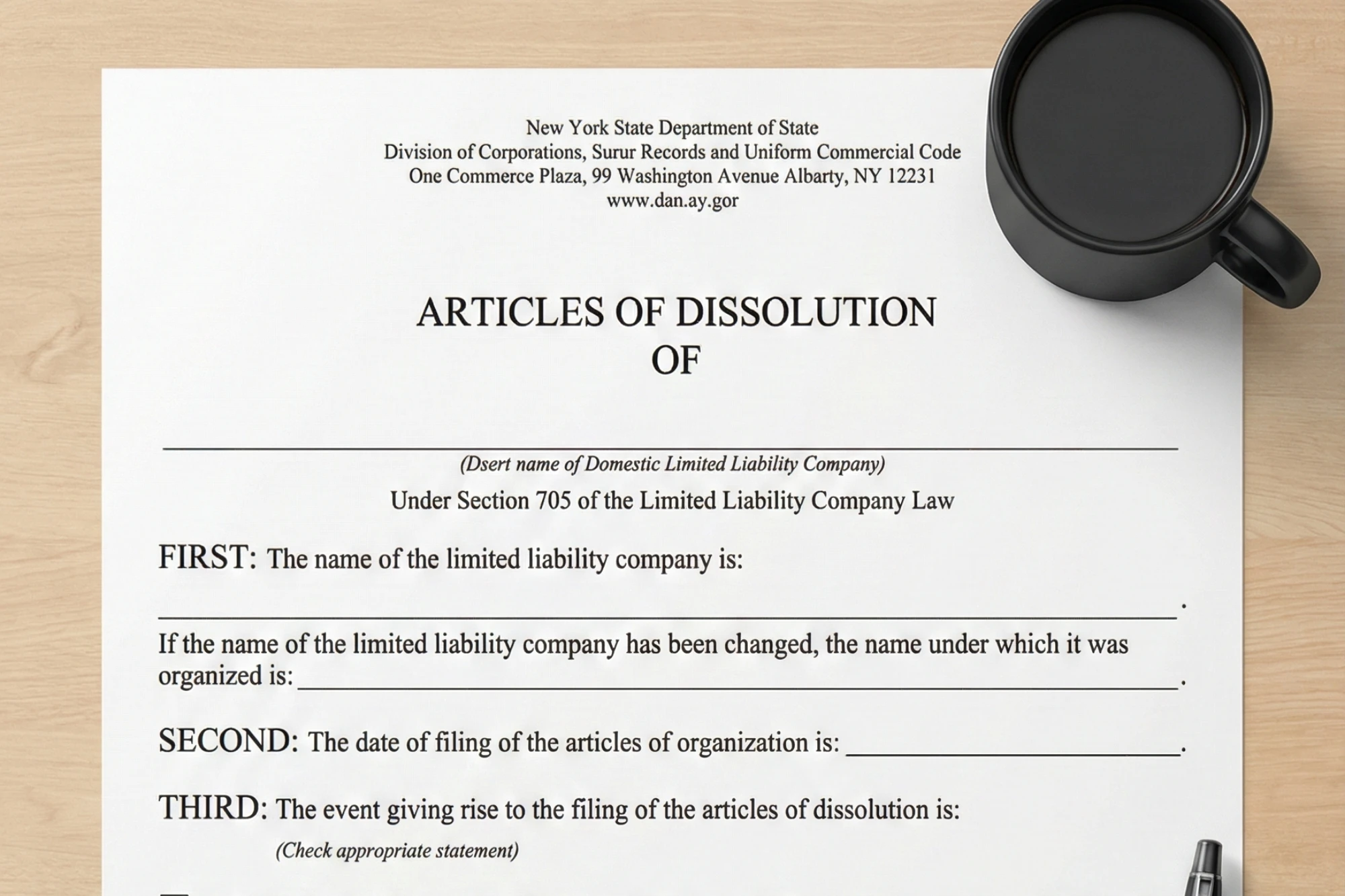
To legally end your LLC's existence, you must file a specific form with the Secretary of State where your business was formed. The name of the form varies by state:
- Delaware: Certificate of Cancellation.
- Wyoming: Articles of Dissolution.
- Florida: Articles of Dissolution.
The Filing Fee: Most states charge a fee to process this document. While it might feel painful to pay to close a business, this one-time fee protects you from years of accumulating annual taxes.
4. Notify Creditors and Close Accounts
Once the legal paperwork is filed, you need to "wind up" your affairs.
Notify Creditors: You should inform any vendors, landlords, or lenders that the business is closing. Give them a deadline to submit any final claims for payment. This protects you from surprise lawsuits months later.
Close Your Business Bank Account:
- Empty the Account: Pay off final debts and distribute any remaining money to the owners.
- Contact the Bank: Do not just leave the balance at $0.00. Call your bank (Mercury, Brex, Chase, etc.) and formally request to close the account. Ask for a written confirmation that the account is closed.
5. Cancel Your EIN and Licenses
The final step is to tie up loose ends with the federal government.
Cancel Your EIN: The IRS does not cancel EINs automatically. You should send a letter to the IRS office where you filed your return. Include:
- The legal name of the entity.
- The EIN.
- The business address.
- The reason for closing.
- A copy of the EIN Assignment Notice (if you have it).
Cancel Business Licenses: If you obtained any specific licenses (like a seller's permit for sales tax), cancel them with the issuing agency.
Final Thoughts: Leave Cleanly
Closing an LLC properly is about protecting your future. By following these steps, you ensure that you don't have old debts or tax penalties hanging over your head when you are ready to launch your next big idea.
Dissolve Your LLC with Clemta: If you need to close your US entity, Clemta can handle the Articles of Dissolution and guide you through the compliance checklist to ensure you exit the US market correctly and without penalty.
Disclaimer: Mercury is a fintech company, not an FDIC-insured bank. Banking services provided through Choice Financial Group and Column N.A., Members FDIC.

Özgür Kuşkonmaz
Head of Business Development at Clemta