Forming a U.S. company gives an international founder access to the American market, modern payment infrastructure, and a legal structure customers and platforms trust. Once the paperwork is done and if you have not started yet, register your company in Delaware first a more practical question appears: what will you actually sell, and who will make it?
This article is about one specific answer: Snapwear, a print on demand partner built for founders who do not want to buy inventory. If you are still weighing the model itself rather than the supplier, read our guide on how to start a clothing line with print-on-demand first; what follows assumes you already know how the model works and want to know what Snapwear adds to it.
What Snapwear Is and Who It Fits
Snapwear is a production and fulfillment operation, not a marketplace. You design, list and market the product; Snapwear prints, packs and ships it after a customer pays. The catalog covers T-shirts, hoodies, accessories, all-over-print garments and home decor, which is enough range to build a coherent collection rather than a single-product store.
The founders it fits best are the ones running a lean U.S. LLC from abroad: no warehouse, no equipment, no staff, and a need to look like an established brand from the first order. If you are already producing in volume with your own supplier and negotiating unit costs, this is not the right infrastructure for you.
Nothing Is Produced Until Someone Buys
The financial logic is the whole point. In classic retail you spend first and hope demand follows. Here the order arrives, the payment clears, and only then does production cost appear. You can design something today, publish the listing tomorrow, and pay nothing if nobody buys.
For a new company this changes what a failed idea costs. A design that does not sell leaves you with no leftover stock, no storage bill and no capital locked in a box — just the time you spent on the artwork. That makes it realistic to test five niches instead of betting the year on one.
Kornit Digital: Why the Printing Hardware Matters
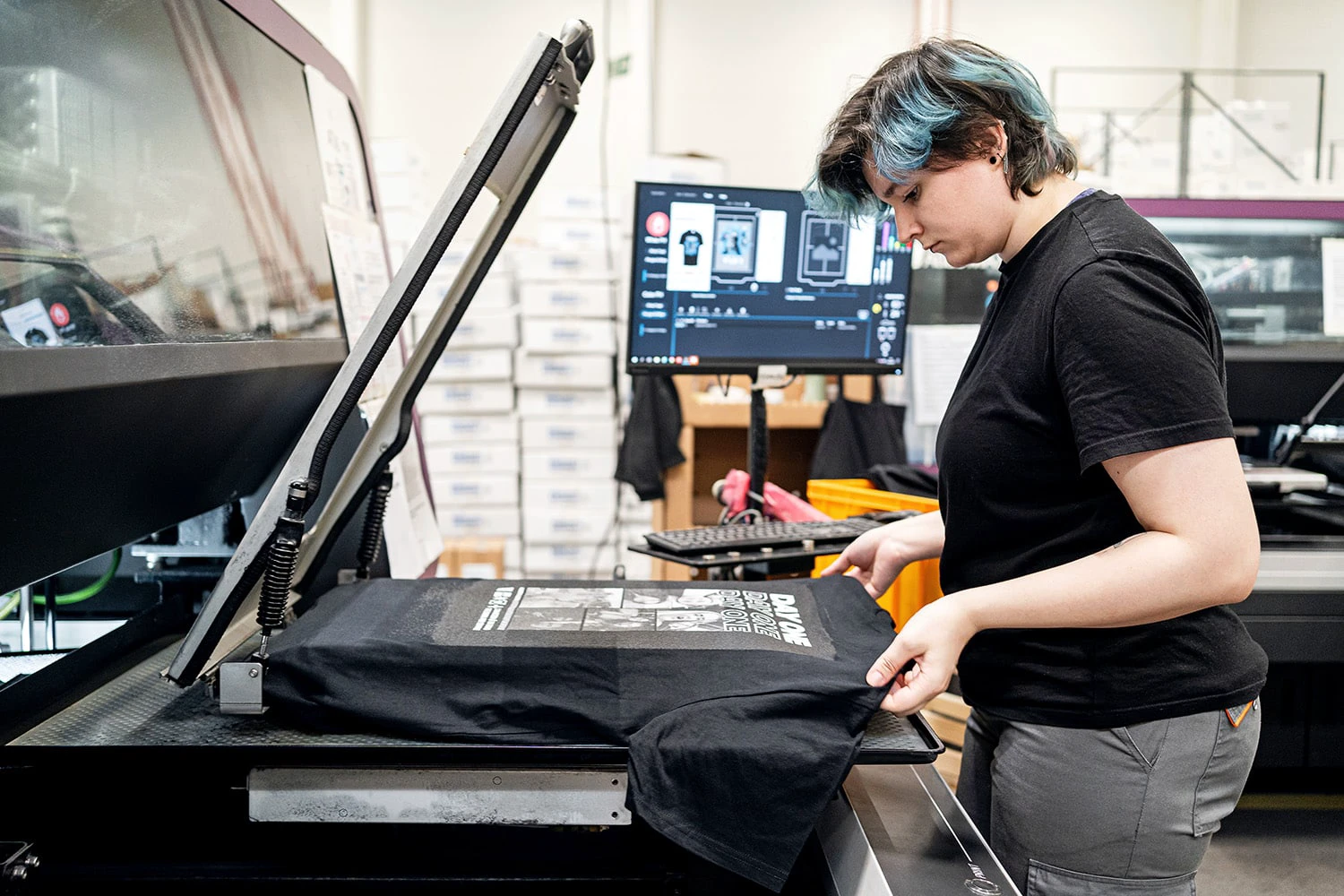
Both the U.S. and European facilities run on Kornit Digital systems, among the most advanced and eco-efficient textile printing technologies in use today. This is a detail most suppliers cannot claim, and it decides whether your product feels retail or feels like merch.
Color, Feel and Durability
Kornit output gives retail-grade color vibrancy and a soft hand feel rather than the stiff, plasticky print that cheaper equipment leaves on cotton. It also survives washing, which matters more than founders expect: the first wash is when a customer decides whether to order from you again.
Consistency Across Volumes
The same equipment and process apply whether the order is one shirt or a thousand. Consistency is the quiet foundation of brand credibility — a customer who reorders and receives a visibly different shade of the same design will not order a third time.
Your Brand on the Label, Not the Supplier's
The difference between a store and a brand is usually packaging. Snapwear supports branded neck labels, packaging inserts and personalized unboxing elements, so the parcel that arrives carries your identity end to end.
Where This Actually Pays Off
For creators, influencers and niche sellers, branded presentation raises perceived value and justifies a higher price on an identical garment. It also removes the strongest signal that a product was drop-shipped, which is exactly the signal that suppresses repeat purchases.
Two Fulfillment Regions, One Operation
United States - Direct-to-Garment
U.S. production focuses on direct-to-garment printing with domestic shipping. For a founder operating a U.S. LLC from abroad, this is the single biggest advantage: American customers get local delivery speeds and costs, with no customs paperwork and no surprise duties on arrival.
Poland - All-Over-Print for the EU
The European facility in Poland adds all-over-print and wider textile capability, and serves EU customers from inside the union. One brand can therefore sell into both markets without opening a second company, renting space, or shipping stock across the Atlantic.
What to Check Before You Launch
Order samples of your two or three best designs before you advertise anything, and judge the garment, the print and the packaging as a customer would. Snapwear usually fulfils DTG and sublimation orders within around two business days, while all-over-print products generally take about five business days. Shipping typically takes an additional one to two business days for domestic deliveries within Poland or the United States, while delivery to other destinations may take longer depending on the route and carrier. Publish delivery estimates that are slightly more conservative than these stated timeframes.
Build your pricing from the finished cost — product, printing, branding, shipping and payment fees — and only then decide your margin. Print on demand trades a lower unit margin for near-zero risk, so a price set by guesswork is the most common way founders lose money on a model that is supposed to be safe. Finally, write your returns and reprint policy before the first sale rather than during the first complaint.
Where Clemta Fits: From Formation to First Sale
The two halves of the problem are legal and operational. Clemta handles the first: incorporation, tax identification, banking and ongoing compliance. Snapwear handles the second: making and shipping the product.
In practice that means the gap between registering a company and taking money from a customer can be weeks instead of months. You will still need the boring pieces in place — open a U.S. business bank account so payouts have somewhere to land, and sort out EIN and ITIN for e-commerce businesses before you connect a payment processor — but none of it requires you to be in the United States.
Is This the Right Model for You?
Print on demand is the correct choice when you value speed and low risk over unit economics, when your designs are the product, and when you want to test demand before committing capital. It is the wrong choice when your margins depend on bulk pricing, when you need custom materials or cuts, or when your brand promise involves manufacturing you control directly.
Getting Started
Pick one niche, prepare two or three designs, order samples, price from real costs, and launch a small collection rather than a catalog. If the first designs sell, expand into the U.S. and EU markets through the same setup. If they do not, you have lost artwork time and nothing else — which is the entire argument for building this way.

Özgür Kuşkonmaz
Head of Business Development at Clemta