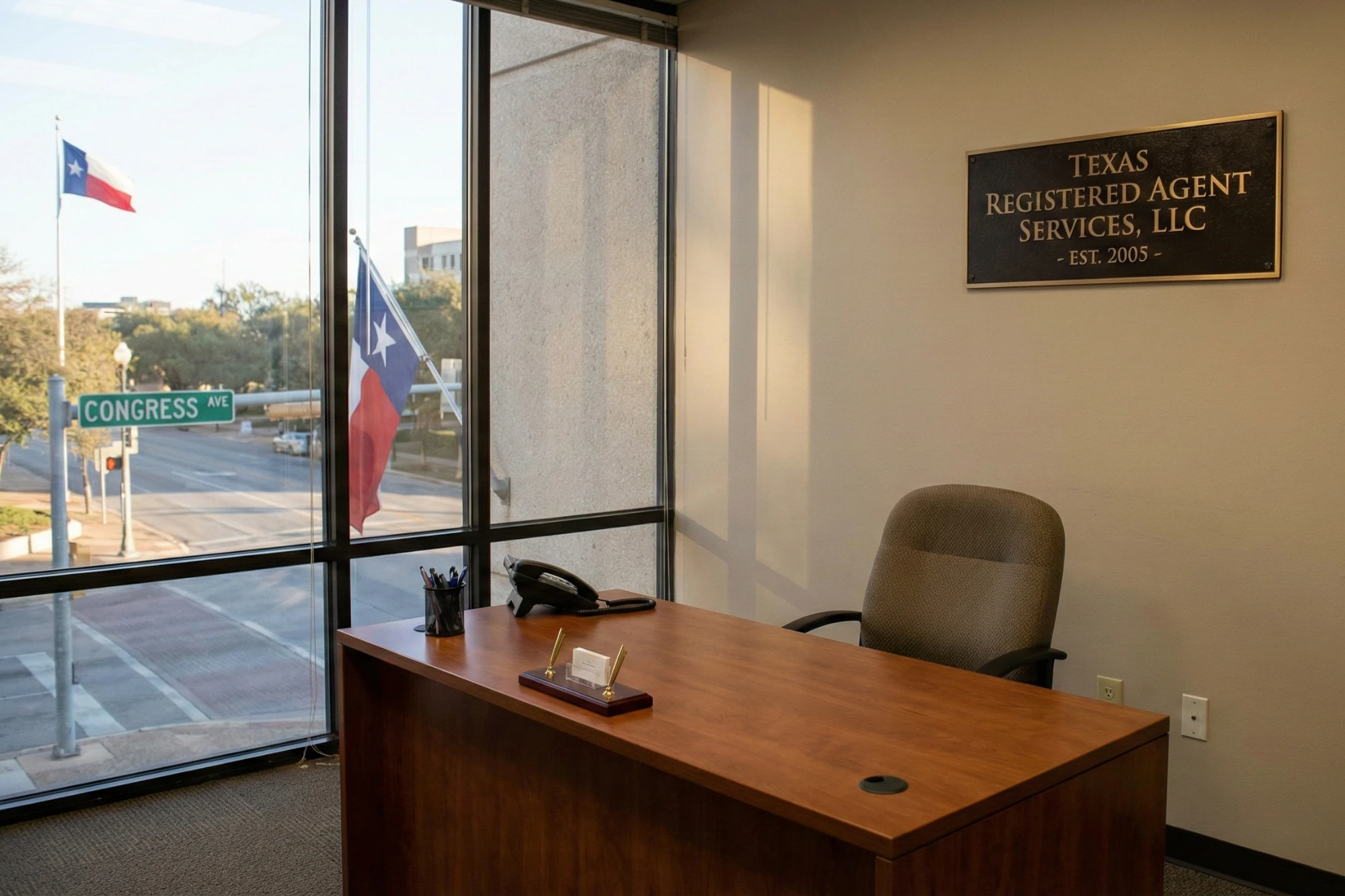
When you file your Certificate of Formation for a Texas LLC or Corporation, the state asks for one specific detail: your Registered Agent.
For many non-resident founders, this requirement feels like a minor administrative hurdle. However, choosing the wrong agent or attempting to act as your own can lead to legal complications and a total loss of privacy.
In the Lone Star State, the Registered Agent is a mandatory bridge between your business and the Texas Secretary of State. Here is exactly how to handle this requirement for your business launch.
What is a Texas Registered Agent?
A Registered Agent is an individual or a professional service designated to receive "Service of Process" and official government correspondence on behalf of your business.
Think of them as your company's official point of contact. If your business is sued, or if the Texas Comptroller sends a tax notice, those documents go to your Registered Agent first.
The Legal Requirements in Texas
The Texas Business Organizations Code is very specific about who can fill this role. To be a valid Registered Agent in Texas, the following criteria must be met:
- The agent must have a physical street address in Texas. This is known as the Registered Office. A P.O. Box or a virtual mailbox is not legally sufficient for this role.
- The agent must be available at that physical address during normal business hours to sign for hand-delivered legal documents.
- In Texas, an agent must formally consent to the appointment. While you do not file this consent with the State, you must keep a copy in your company records.
Why You Should Not Use Your Own Address
If you have a physical office or a friend in Texas, you might be tempted to use that address to save on costs. This is usually a strategic mistake for three reasons.
1. Privacy and Public Records: Your Registered Agent's name and address are part of the public record. If you use a personal address, it will be indexed by search engines and becomes easily accessible to anyone searching for your company. By using a professional service, you keep your private residence or office address off these public databases.
2. The Risk of Embarrassment: If your business is ever involved in a legal dispute, a process server must deliver the summons in person. If you act as your own agent at your business location, this delivery could happen in front of customers, employees, or partners. A professional agent receives these documents discreetly at their own office instead.
3. Reliability During Travel: As a non-resident founder, you are often traveling or working across different time zones. If the state sends a time-sensitive franchise tax notice and no one is available to sign for it, your business could lose its "Good Standing" status. This leads to unnecessary fines or even the administrative dissolution of your company.
The Role in Franchise Tax Compliance
Texas does not have a state income tax, but it does have a Franchise Tax. Your Registered Agent will receive the notifications regarding your "Public Information Report" (PIR), which must be filed annually. Missing this notice because of an unreliable agent is the most common reason Texas businesses are shut down by the state.
Choosing a Professional Partner
A Registered Agent is more than just a mailbox. They are your compliance gatekeeper in one of the most business-friendly states in the world.
When you form your Texas LLC with Clemta, we provide professional Registered Agent services as part of our package. We ensure your business remains in 100% compliance with the Texas Secretary of State, receive all legal notices on your behalf, and upload them instantly to your secure dashboard so you never miss a deadline.

Öykü Çelik
writer