Introduction
This ebook is designed specifically for non-U.S. freelancers and consultants who operate on a global scale and are looking to elevate their professional standing. If you have ever felt limited by your local financial infrastructure or wished to tap into the vast opportunities of the American market, this guide is for you.
The primary goal of this resource is to provide a clear, step-by-step roadmap for establishing and successfully managing a U.S. company from anywhere in the world. By reading this, you will learn how to transform your freelance work into a formal business entity, unlocking access to world-class financial tools, domestic U.S. payment systems, and essential legal protections. This is your foundation for building a thriving, professional, and internationally recognized business.
Table of Contents
- Chapter 1: Why a US Company?
- Chapter 2: LLC vs. C-Corp
- Chapter 3: Choosing a State
- Chapter 4: Naming & Agents
- Chapter 5: Filing & Governance
- Chapter 6: Getting an EIN
- Chapter 7: Banking & Payments
- Chapter 8: D-U-N-S Numbers
- Chapter 9: Bookkeeping
- Chapter 10: US Tax Rules
- Chapter 11: State Taxes
- Chapter 12: Managing Growth
Chapter 1: Why a US Company?
For many global freelancers, the decision to form a U.S. company is a pivotal moment that separates a “side hustle” from a professional enterprise. Operating as a U.S. entity provides a formal vehicle to collect revenue and protect your personal interests, regardless of where you call home.
The Professional Edge
Establishing a U.S. company immediately unlocks a new level of professionalism. It provides:
- Enhanced Credibility: Clients often feel more secure working with a registered U.S. business entity rather than an individual freelancer.
- Global Reach: A U.S. company allows you to serve clients worldwide with a recognized legal structure.
- Liability Protection: One of the most significant benefits is the legal protection that a corporate structure provides, which operating as an individual simply cannot offer.
Access to Financial Ecosystems
The U.S. business environment is world-renowned for its business-friendly atmosphere and robust financial tools. By forming a company, you gain:
- U.S. Banking Access: You can open U.S. business bank accounts, which allows you to receive payments via domestic ACH and wire transfers.
- Payment Processor Integration: A U.S. entity is often required to link with premier platforms like Stripe and PayPal or app marketplaces for payouts.
- Currency Advantages: If you bill in USD, you can save significantly on currency conversion fees by keeping funds in a U.S. account.
- Marketplace Accessibility: Having a U.S. LLC simplifies registration requirements for major marketplaces like Amazon, especially for non-U.S. persons.
Operational Freedom
A U.S. company serves as a “bridge” that allows you to focus on your actual craft whether that is consulting, coding, marketing, designing, or creative work.
- Laptop Lifestyle: You can leverage the U.S. business environment to your advantage while running the “next big thing” from your laptop.
- Multi-Currency Earnings: The structure enables you to earn in different currencies and manage your global revenue more effectively.
- Scalability: The U.S. market and legal framework provide a solid foundation that can support your business as it grows from a solo operation to a larger team.
Ultimately, forming a U.S. company is about more than just paperwork; it is about creating a solid foundation that allows you to operate globally with the same tools and protections as an American-based entrepreneur.
Chapter 2: LLC vs. C-Corp
The first and arguably most critical decision in your journey is selecting the legal structure that best fits your business needs. For non-U.S. entrepreneurs, the choice almost always narrows down to two entities: the Limited Liability Company (LLC) and the C-Corporation (C-Corp). Each has distinct advantages and long-term implications for how you will manage your business.
The Limited Liability Company (LLC)
The LLC is the most popular choice for freelancers, consultants, and small remote teams due to its simplicity and flexibility.
- Ownership: An LLC is owned by one or more “members,” who can be individuals or entities.
- Taxation: It features pass-through taxation, where profits and losses are reported on the owners’ personal tax returns, effectively avoiding double taxation.
- Management: It offers a flexible management structure; you can manage it yourself or appoint managers without needing a formal board.
- Compliance: Administrative requirements are minimal—you aren’t required to have bylaws, issue shares, or hold formal annual meetings, though state-level reports still apply.
- Costs: Generally, LLCs have lower setup and maintenance costs compared to corporations.
The C-Corporation (C-Corp)
A C-Corp is the standard structure for startups that have high-growth ambitions and plan to seek institutional funding.
- Ownership: It is owned by shareholders and can have an unlimited number of them, including foreign individuals.
- Taxation: It is subject to double taxation, meaning the corporation pays tax on its profits, and shareholders pay tax again on any dividends they receive.
- Management: It requires a formal hierarchy including a board of directors, officers, and shareholder meetings.
- Compliance: The burden is higher; you must adopt bylaws, issue stock certificates, hold annual meetings, and keep detailed corporate minutes.
- Investment: This is the preferred structure for venture capital and institutional investors.
The S-Corp Restriction
It is a common point of confusion, but non-U.S. residents are not eligible for S-Corporation status. This is a specific tax designation for smaller corporations that requires all owners to be U.S. citizens or residents. Consequently, if you choose a corporate structure, it will be a C-Corp by default.
Summary Table: LLC vs. C-Corp
| Feature | LLC (Limited Liability Company) | C-Corporation (C-Corp) |
| Ideal For | Freelancers and small online businesses. | Startups seeking venture capital. |
| Taxation | Pass-through (no double taxation). | Double taxation on profits/dividends. |
| Compliance | Minimal; no formal bylaws required. | Formal; must have bylaws and meetings. |
| Flexibility | Can convert to a C-Corp later if needed. | Hard to convert back to an LLC. |
Pro Tip: Most freelancers should start as an LLC for simplicity. You can always convert to a C-Corp later if you decide to raise investment, but going from a C-Corp back to an LLC is difficult and can trigger unwanted taxes.
Chapter 3: Choosing a State
Choosing the right state for your company is just as important as choosing the right business structure. In the United States, you are not required to incorporate in the state where you live or even where your customers are located. For non-U.S. freelancers, three states stand out as the most popular choices: Wyoming, Delaware, and Nevada.
The Top Three Contenders
Each of these states offers unique advantages depending on whether you value low costs, investor appeal, or total privacy.
| Feature | Delaware | Wyoming | Nevada |
| Reputation | The U.S. corporate capital; trusted by investors and large corporations. | Known for simplicity, privacy, and low fees—ideal for small or solo founders. | Business-friendly with privacy protections, but less recognized than Delaware. |
| Annual Fees | Flat $300 franchise tax for LLCs; annual report required for corporations. | Around $60–$70 annual fee; no franchise tax. | Higher annual fees (often $350+) plus business license costs. |
| State Income Tax | No tax on out-of-state income. | No corporate or personal state income tax. | No corporate or personal state income tax. |
| Privacy | Owner names may appear in filings. | Allows anonymous ownership; members are not listed publicly. | Strong privacy laws; owner info can remain confidential. |
| Legal System | Specialized Court of Chancery for business disputes; highly predictable. | Strong asset-protection laws but a smaller legal framework. | Fewer business-specific courts; lower predictability than Delaware. |
| Ease of Maintenance | Moderate—requires annual franchise tax and filings. | Very easy. Minimal paperwork and low renewal costs. | Moderate—requires annual filings and higher fees. |
State Recommendation Summary
To help you make a final decision, consider these general guidelines:
- Choose Wyoming for Simplicity: This is the gold standard for freelancers, consultants, and small business owners who want the lowest possible maintenance costs and strong privacy.
- Choose Delaware for Scalability: If you are a startup founder planning to raise venture capital, issue shares, or eventually go public, Delaware’s legal system and reputation make it the only choice for institutional investors.
- Choose Nevada for Privacy: While more expensive than Wyoming, Nevada offers a business-friendly environment with strong confidentiality laws for those who specifically seek those protections and are willing to pay the higher fees.
Important Note: While these states do not tax out-of-state income, you may still face state-level taxes if you conduct business or have “economic nexus” in a different state, such as hiring employees or reaching significant revenue thresholds there.
Chapter 4: Naming & Agents
With your business structure and state selected, you must now handle the two most critical components of your company’s public and legal identity: its name and its official point of contact.
Selecting Your Business Name
Your company name is more than a brand; it is a legal identifier that must meet strict state-level requirements.
- Uniqueness: States prohibit names that are identical or confusingly similar to existing businesses registered in that state.
- Entity Suffixes: You are generally required to include the entity type in the name, such as “Acme Consulting LLC” or “Acme Corp”.
- Restricted Words: You cannot use words like “Bank” or “Insurance” without specific licenses.
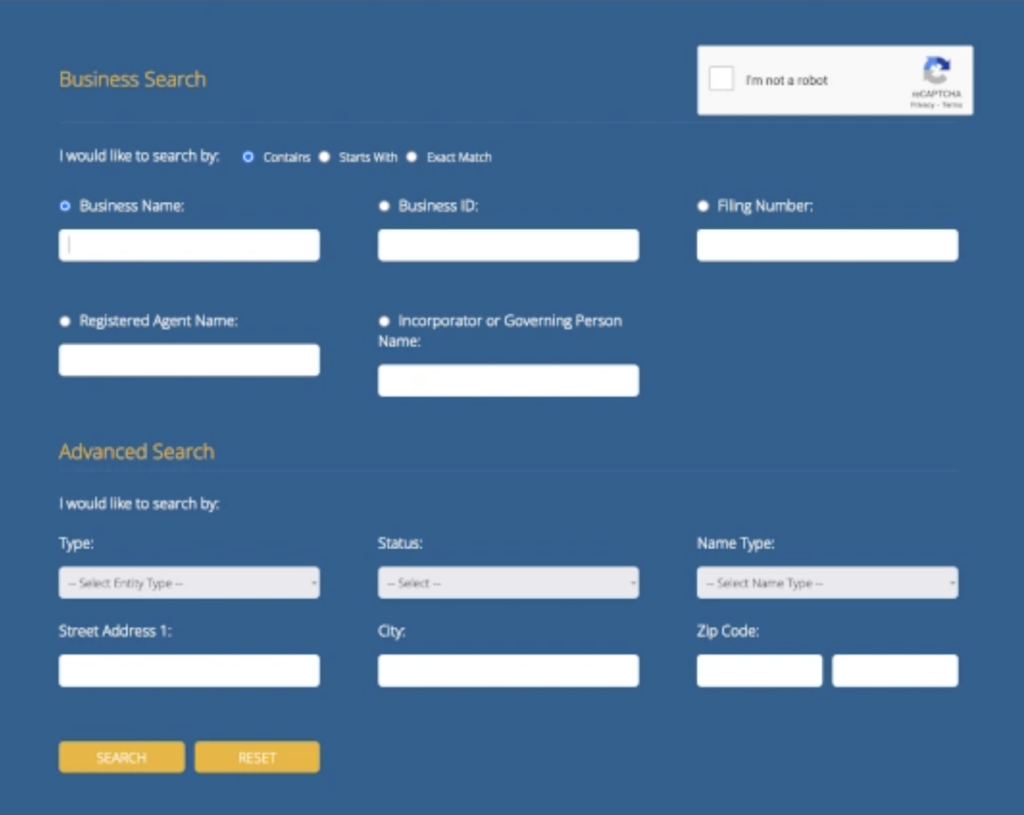
- Availability Checks: Services like Clemta can verify if a name is restricted or too similar to an existing entity and help you find a compliant alternative.
The Registered Agent Requirement
Every U.S. company is legally required to appoint a Registered Agent located in the state where the company is incorporated.
- The Role: This agent is responsible for receiving official mail, government correspondence, and service of process (legal documents) on behalf of your business.
- Physical Presence: The agent must have a physical address in the state and be available during standard business hours to receive deliveries.
- Critical for Non-Residents: Since you are operating from abroad, a professional registered agent service is essential to ensure you never miss a lawsuit notice or an annual report reminder.
- Consequences of Neglect: If you fail to maintain a valid agent, the state may dissolve your company for non-compliance.
Professional Representation
Many entrepreneurs choose professional services to act as their agent. Clemta, for instance, provides a registered agent with a real U.S. address as part of its packages to satisfy legal requirements. This ensures that all official documents reach you promptly and that your company remains in “good standing” with the state.
Chapter 5: Filing & Governance
Once you have decided on your business structure, your state, and your name, you must officially form the company by filing paperwork with the state. The documents differ slightly based on the entity type you selected.
The Official Filing Process
For an LLC, you file Articles of Organization. This document typically includes the name of the LLC, the principal office address, and the registered agent information. It also specifies the management structure, such as whether the business is managed by members or managed by managers. Accuracy is crucial because any mistakes can delay your approval.
For a Corporation, you file Articles of Incorporation. This includes the name of the corporation, the registered agent, and the number of authorized shares. Some states also ask for the names of the initial directors in this filing.
Filing fees vary by state and range from 50 dollars to a few hundred dollars. For example, the LLC filing fee in Delaware is 110 dollars, while in Wyoming it is 102 dollars. After the state processes your filing, your company is officially formed. You will receive stamped filing documents as official proof of your legal establishment. Keep these in your records because you will need them to open bank accounts.
Internal Governance and Rules
Having internal governing documents is critical even if they are not required to be filed by law.
- Operating Agreement for LLCs: This internal document outlines how the LLC will be run, ownership shares, and rules for decision making. For a single member LLC, it helps establish separation between you and the business to protect your liability. In multi member LLCs, it details the percentage of each member, their contributions, and how profits or losses are shared.
- Corporate Bylaws for Corporations: Bylaws serve a similar purpose for corporations. They set the rules for governance, such as how directors are elected and how meetings are conducted. You will also have initial corporate resolutions to officially appoint officers and approve issuing stock to the founders.
These documents are usually prepared right after incorporation. While they are internal, keeping them in your corporate records is essential for proving legitimacy to investors or banks. Do not skip these formalities because they play a big role in maintaining your legal good standing.
Chapter 6: Getting an EIN
The Employer Identification Number is a unique federal tax ID issued by the IRS to identify your business for tax and banking purposes. It functions as the official identification number for your company when you file taxes, open bank accounts, or work with payment processors. Even if an LLC has no employees, you should obtain an EIN to establish your financial infrastructure.
Why is the EIN Essential?
You need an EIN to perform several vital business activities:
- Banking: You must have an EIN to open a US business bank account.
- Taxes: The number is required to file federal and state taxes.
- Platforms: You will need it to register on platforms like PayPal, Stripe, and Amazon.
- Employment: If you hire employees or contractors, the EIN is used to manage payroll.
- Verification: It allows you to verify your company with various vendors and financial institutions.
The Application Process
The EIN application is submitted to the IRS using Form SS 4. For non US residents who do not have a Social Security Number, the application must be submitted by fax or mail. This is because online filing is unavailable for those without a US Social Security Number.
Typical processing times depend on the method used:
- Expedited Processing: This usually takes 2 to 4 weeks.
- Standard Processing: This can take 6 to 8 weeks.
- With a Social Security Number: If you already have a US Social Security Number, you can usually receive your EIN within one business day.
After the IRS issues your EIN, they send an EIN confirmation letter known as CP 575. This letter is your official proof of the number. You must keep a copy because banks frequently ask for this specific letter when you open an account. Once you have your EIN in hand, you are ready to set up your financial accounts.
Chapter 7: Banking and Payments
One of the most critical steps after forming your company and obtaining an EIN is to open a US business bank account. Having a US based bank account in the name of your company enables you to separate personal and business finances. This separation is required for linking with platforms like Stripe and PayPal, as well as many app marketplaces for payouts. It also provides a level of credibility when US clients pay you via domestic transfers like ACH or wires.
Opening a US Business Bank Account
To open an account, banks will typically ask for several documents to verify your business. You will need your formation documents, such as the Certificate of Formation, and your EIN confirmation letter known as the CP 575. Additionally, you must provide identification for the owner of the company, which is usually a passport.
Banks also require proof of your operational address, which is the location where you conduct your business activities. Since many online entrepreneurs operate remotely, this can be a residential or office address. The proof of address document must be issued within the last 60 days. Acceptable documents include an official bank statement or a utility bill for water, internet, or gas that shows the full name and address of the beneficial owner.
The Challenge of Physical Addresses
A common challenge for non US residents is that banks and payment providers might reject virtual mailbox addresses. Regulatory rules require proof of a tangible presence, so they often look for a real operating address and a corresponding utility bill. If you do not have a physical US office, you may need a service that provides an acceptable mailing address rather than just a PO box. Some formation services like Clemta offer a real street address and help with a supporting utility bill for verification.
Once you have an EIN, you can take advantage of partnerships like the one between Clemta and Mercury. This allows you to start operating immediately and update your account with the EIN within 60 to 90 days, which helps foreign founders avoid waiting weeks for tax processing.
Setting Up Payment Gateways
With your bank account established, you can open accounts with payment processors to accept payments globally.
- Stripe: This platform allows you to accept credit card payments for services, subscriptions, or app charges. To sign up, you must provide your legal business name, EIN, business address, phone number, and website. You will also need to scan your passport to verify your identity as the owner. Stripe requires a US business bank account with a valid routing and account number that matches your legal business name.
- PayPal Business: PayPal is useful for invoicing clients and offering a trusted payment method. Registration requires your legal company name, EIN, and business contact information. PayPal also requires a US physical address and may ask for an Individual Taxpayer Identification Number, especially if you access the account from abroad.
Financial Discipline
It is essential to keep your business account strictly for business transactions. You must not mix personal expenses with business funds, as this could jeopardize your liability protection by piercing the corporate veil. Use the account only for client payments, business purchases, and paying yourself distributions.
Chapter 8: D U N S Numbers
For many freelancers, especially those in the mobile app or software development space, the D U N S Number is a vital piece of the business puzzle. It stands for Data Universal Numbering System and serves as a unique nine digit identifier for your business. While it might seem like just another string of numbers, it is the cornerstone of your company’s credit profile in the United States.
The Apple App Store Connection
If you are an app developer, the primary reason you will need a D U N S Number is to enroll in the Apple Developer Program as a company. Apple requires this number to verify the legal identity and status of your business. Without it, you cannot have your company’s name appear as the seller on the App Store.
It is important to note that while Google Play also requires verification for business accounts, they generally verify legal entities via documentation rather than the D U N S system. Therefore, this step is most critical for those targeting the Apple ecosystem.
Building Business Credit
Beyond the App Store, a D U N S Number allows you to start building a credit history for your company. As you establish trade accounts or credit lines, vendors may report your payment history to Dun and Bradstreet under this number. Over time, this builds a profile that can help your business secure better terms with suppliers or even access traditional financing. Even if you are not focused on credit yet, simply having the number is useful because some government registrations and larger corporate clients may ask for it.
The Application Process and Timelines
Obtaining a D U N S Number requires planning due to the verification steps involved. You have two main options for processing:
- Regular Processing: This is typically free and takes around 30 business days.
- Expedited Processing: This is available for a fee and reduces the wait time to about 8 business days.
During the verification stage, Dun and Bradstreet may reach out to you to confirm specific details about your business. They might ask for your number of employees or your specific business type to ensure their records are accurate.
Syncing with Apple
You must also account for the time it takes for other systems to recognize your new number. Once the number is issued, Apple may take up to 5 business days to recognize it in their own system. An additional 2 business days might be needed for the information to fully sync across their platforms. Because of these delays, it is best to plan for a total wait of at least one to two weeks after receiving your number before you attempt to complete your Apple Developer enrollment.
Chapter 9: Bookkeeping
Running a successful business involves staying on top of your bookkeeping, which is the day to day tracking of all income and expenses. Establishing good bookkeeping practices early on helps you understand your profitability and makes the tax season much easier to navigate. It also serves as your best defense if your business is ever audited.
The Gold Rule: Separate Your Finances
The most critical practice for any business owner is to use your business bank account and business credit card exclusively for company transactions. You must never pay personal bills from your business account or business bills from your personal account. This strict separation is vital for accounting clarity and for maintaining your liability protection. Mixing these funds can jeopardize your legal standing by allowing a court to pierce the corporate veil.
Leveraging Accounting Software
Modern bookkeeping relies on automation to save time and reduce errors. Using a dedicated accounting dashboard allows you to connect directly to your US business bank account to automatically import and categorize every transaction.
An effective system should help you manage the following:
- Income Tracking: Record all sources of revenue including client payments, ecommerce sales, or service fees.
- Expense Management: Track every business cost such as software subscriptions, advertising, and contractor payments.
- Financial Reporting: Regularly generate key reports like your Profit and Loss Statement and your Balance Sheet.
- Account Reconciliation: Check your records against your bank statements frequently to ensure total accuracy.
Automation syncs your transactions in real time, providing a clear and up to date overview of the financial health of your company. It centralizes your bookkeeping and invoicing in one secure place that is accessible from anywhere.
Invoicing and Payments
If you provide services, you must maintain a professional log of all invoices sent to clients. You should track which invoices have been paid and have a process for following up on any late payments. Many payment platforms like Stripe or PayPal have built in features for this, or you can use dedicated invoicing tools that integrate with your accounting software.
Tax Reserves and Professional Support
Not all income you receive is yours to keep, as some will eventually be required for taxes. It is a wise habit to set aside a specific percentage of your revenue in a savings sub account for future tax payments. This proactive approach ensures you are not caught off guard when your tax bills are due.
For many entrepreneurs, managing books can feel overwhelming. Professional bookkeeping services specifically designed for non-US owners can handle your monthly records and prepare your financial statements according to US standards. By keeping organized books, your accountant can work more efficiently, which potentially saves you money on professional fees during tax season.
Chapter 10: US Tax Rules
Understanding your tax obligations is essential for the longevity of your business. The US federal government taxes corporate income and certain LLC income. How these rules apply to you depends entirely on the entity type you have established.
Single Member LLC as a Disregarded Entity
If you have an LLC with only one owner and you have not elected to be taxed as a corporation, the IRS views your business as a disregarded entity. This classification means the LLC itself does not pay corporate income tax. Instead, as a foreign owner, you are responsible for reporting the income.
Whether you owe money depends on if the income is effectively connected to a US trade or business, which is referred to as ECI. If your clients are located abroad and you perform all your work outside the United States, you might owe zero US tax. However, you are still legally required to file information returns.
- The Deadline: The federal tax filing deadline for single member LLCs owned by non US persons is April 15 each year.
- Required Forms: You must typically file Form 5472 along with Form 1120 by this date.
- Extensions: You can request an automatic 6 month extension by filing Form 7004, which moves your deadline to October 15.
Multi Member LLC as a Partnership
An LLC with multiple owners is generally treated as a partnership for tax purposes.
- Annual Filing: The business must file IRS Form 1065, known as the US Partnership Return of Income, every year.
- Owner Reporting: The company must issue Schedule K 1s to each partner to report their share of the profits.
- Foreign Partner Taxes: Foreign partners may be required to pay tax on their share of effectively connected income and may be subject to withholding on that income.
- The Deadline: The filing deadline for Form 1065 is March 15 each year. An extension via Form 7004 can move this deadline to September 15.
The C Corporation Structure
A C Corporation is a separate taxable entity that must file a corporate tax return annually using Form 1120. It pays corporate income tax on its profits regardless of where the owners live.
- Tax Rate: The current federal corporate tax rate is a flat 21 percent.
- Dividends: If you receive dividends as a foreign shareholder, those payments may be subject to a 30 percent withholding tax. This rate can sometimes be reduced if there is a tax treaty between the US and your home country.
- The Deadline: The filing deadline for Form 1120 is April 15 each year. An extension can move the due date to October 15.
Critical Information Reporting
One of the most overlooked areas for new foreign entrepreneurs is the requirement for information reporting. The IRS requires specific forms for foreign owned companies to track transactions and ownership.
- Common Forms: These include Form 5472 and Form 5471.
- Withholding Forms: You may need to file Form 1042 or 1042 S if your company withheld taxes on payments made abroad.
- FBAR: If your US company maintains bank accounts outside the United States, you may need to file an FBAR.
Because US tax law is highly complex, it is strongly advised to work with an accountant or tax service that specializes in non resident business owners. A professional can handle your filings, prepare necessary schedules, and ensure you correctly claim any applicable treaty benefits or deductions.
Chapter 11: State Taxes
While federal taxes are a primary concern, you must also navigate state level obligations. These requirements vary significantly depending on where you formed your company and where you conduct your business activities.
State Level Income and Activity Taxes
Many freelancers choose Wyoming or Delaware because they are famously business friendly. Neither state imposes a corporate income tax on most LLC income for non residents. In Delaware, corporate income tax only applies to corporations that actually conduct business within the state.
However, your tax responsibilities do not stop at your state of formation. If your LLC is registered in another state, conducts business there, or establishes what is known as economic nexus, you may face state level income or business activity taxes. Some states impose specific costs regardless of your profit, such as:
- Minimum Business Taxes: These are flat fees required just for the privilege of doing business in the state.
- Gross Receipts Taxes: States like Washington or Nevada charge this tax on your total revenue rather than your profit.
- Excise Taxes: These may apply even if you do not maintain a physical office in that specific state.
Understanding Sales Tax and Nexus
Sales tax is a state level tax on the sale of goods and certain services. Unlike the value added tax found in many other countries, sales tax is only charged at the final point of sale to the consumer. As the business owner, you collect this tax from the customer and remit it to the state tax authority.
Your obligation to collect this tax depends on whether your business has a nexus in a state. Nexus describes a sufficient connection that creates a tax obligation, and it is triggered in two main ways:
- Physical Nexus: This occurs if you have a physical presence, such as an office, a warehouse, an employee, or even inventory stored in a state.
- Economic Nexus: This is triggered when you exceed a specific revenue or transaction threshold with customers in a state. For many states, this threshold is 100,000 dollars in sales or 200 separate transactions annually.
Digital Services and Marketplaces
Rules for digital services, software as a service, and online memberships vary greatly between states. If you sell through major marketplaces like the Apple App Store or Google Play, those platforms generally handle the collection and remittance of sales tax on your behalf. However, if you sell digital products or subscriptions directly through your own website, you are responsible for determining if sales tax applies based on each customer’s location.
Compliance Requirements
Once you establish nexus in a state, you must take immediate steps to remain compliant:
- Register for a Permit: You must obtain a sales tax permit from the state Department of Revenue before you begin collecting any tax. Operating without this registration can lead to significant penalties.
- Collect and Remit: You must start collecting the tax at the applicable local and state rates.
- File Regular Returns: Depending on the state, you will file these returns monthly, quarterly, or annually.
- Maintain Detailed Records: You must keep accurate records of all sales, collected taxes, and any exemptions to support your filings during an audit.
- Monitor Growth: As your business expands, you must constantly monitor your sales volume to see if you have triggered nexus in new states.
Chapter 12: Managing Growth
Forming your company is only the start of your journey. Keeping your business in good standing requires ongoing responsibility and proactive management. As your freelance enterprise grows, you must shift your focus toward long term compliance, legal protection, and efficient financial operations.
Ongoing Compliance and Maintenance
To ensure your business remains active and legally protected, you must satisfy several recurring requirements.
- Annual Reports and Renewals: Most states require you to file an annual report to update your business information. Failing to meet these deadlines can result in late fees or the loss of your good standing status.
- Registered Agent Services: You must maintain a valid registered agent at all times. If your agent changes their address or if you decide to switch services, you must notify the state immediately. Missing a legal notice because of an inactive agent can lead to the state dissolving your company.
- Documenting Changes: As your business evolves, you may need to update your legal records. This includes filing amendments if you change your company name or updating your internal agreements if you add new members or partners.
Protecting Your Intellectual Property
As a freelancer or creator, your brand is a valuable asset. You should consider protecting your unique business name, products, or creative work through trademarks and copyrights. For example, registering a trademark with the USPTO can protect your brand identity within the United States market. This is particularly useful for those publishing original content or mobile apps.
Professional Financial Operations
Managing your money correctly is vital for both tax efficiency and legal safety.
- Paying Yourself: For a standard LLC, transferring money for personal use is done through owner distributions or draws. These are not considered salary payments for tax purposes unless you have elected to be taxed as a corporation. You simply withdraw profits after reserving enough funds for business expenses and taxes.
- Client Agreements: Always present contracts and proposals under your legal company name rather than your personal name. This reinforces your liability shield. When clients ask for tax forms, you may need to provide a W 8BEN E form to certify your foreign status.
- International Transfers: Moving funds from your US business account to your local personal account often involves international wire fees. Many entrepreneurs use specialized services to transfer money at better exchange rates. Remember that you must also report this income in your home country according to local tax laws.
Risk Management and Scaling
As your operations expand, your needs for protection and support will change.
- Business Insurance: Depending on your field, obtaining professional liability or errors and omissions insurance can protect you if a client claims your work caused them a loss. US companies can often purchase these policies more easily in the American market.
- Hiring Support: If you grow large enough to need help, you may hire subcontractors or employees. Many non US entrepreneurs prefer to hire independent contractors to avoid the complex obligations associated with US payroll taxes and unemployment insurance.
Conclusion
Launching and managing a US company as a non resident freelancer is a journey that transforms a solo craft into a global enterprise. By following these steps, you have built a solid foundation that includes a legal entity in a business friendly state, a federal tax identity, and the financial tools necessary to operate worldwide.
This framework allows you to focus on what you do best while your company serves as a professional vehicle to collect revenue and protect your interests. Whether you are consulting, coding, or creating, your US company unlocks access to world class financial systems and a level of credibility that is essential for long term success. You now have all the pieces needed to thrive in the American market and beyond.
How Clemta Simplifies Your Journey
Clemta is an all in one digital platform that streamlines the process of launching a U.S. business for international entrepreneurs. We offer a flat rate formation package starting at 349 dollars that covers the essential steps to get your business running legally. This package includes your official company formation, an EIN application, and a registered agent service.
Everything is handled digitally, which means you can manage your company without needing a U.S. visa or a physical presence in the country. Clemta also facilitates access to the U.S. financial system by helping you open a business bank account and integrate with payment processors like Stripe. Additionally, our platform provides automated bookkeeping tools and tax compliance support to keep your business in good standing. We even help you secure your online presence by providing a free .com domain for the first year.
Ready to Launch Your U.S. Business?
You’ve read the guide, understood the benefits of a U.S. entity, and seen how the right foundation can scale your e-commerce brand globally. Now, it’s time to take the next step with confidence.